
IN MAY 2024 we examined press coverage of Roger Youd, initially labelled by journalists as “the Monsall Patient,” a 29-year-old man detained in hospital under a recently enacted piece of legislation applied by the local authority; the measure, perhaps intended to protect vulnerable people, was widely criticised as poorly executed after Roger’s solicitor and barrister publicly stated there was no evidence his condition met the statutory criteria for such a detention order.
In the latest episode, "Remembering Roger Youd," published on the 40th anniversary of Roger’s untimely passing on 16 December 2025, intimate recollections from his brother Carlton Youd sit alongside an inspiring interview with Paul Fairweather — a friend and longstanding, respected LGBT and HIV/AIDS activist who helped establish Manchester’s AIDS line along with the picket and protest in response to Roger’s unlawful detainment.
We also hear first‑hand accounts of Roger’s deep friendship with Ian, a bond so close they mischievously called one another “sisters,” a small, wry testament to the humour that sustained them. Roger’s catalogue of imported disco records — traded for the use of Ian’s solarium — made for a friendship that endured through ordinary joys and the looming, unknowable crisis to come, AIDS.
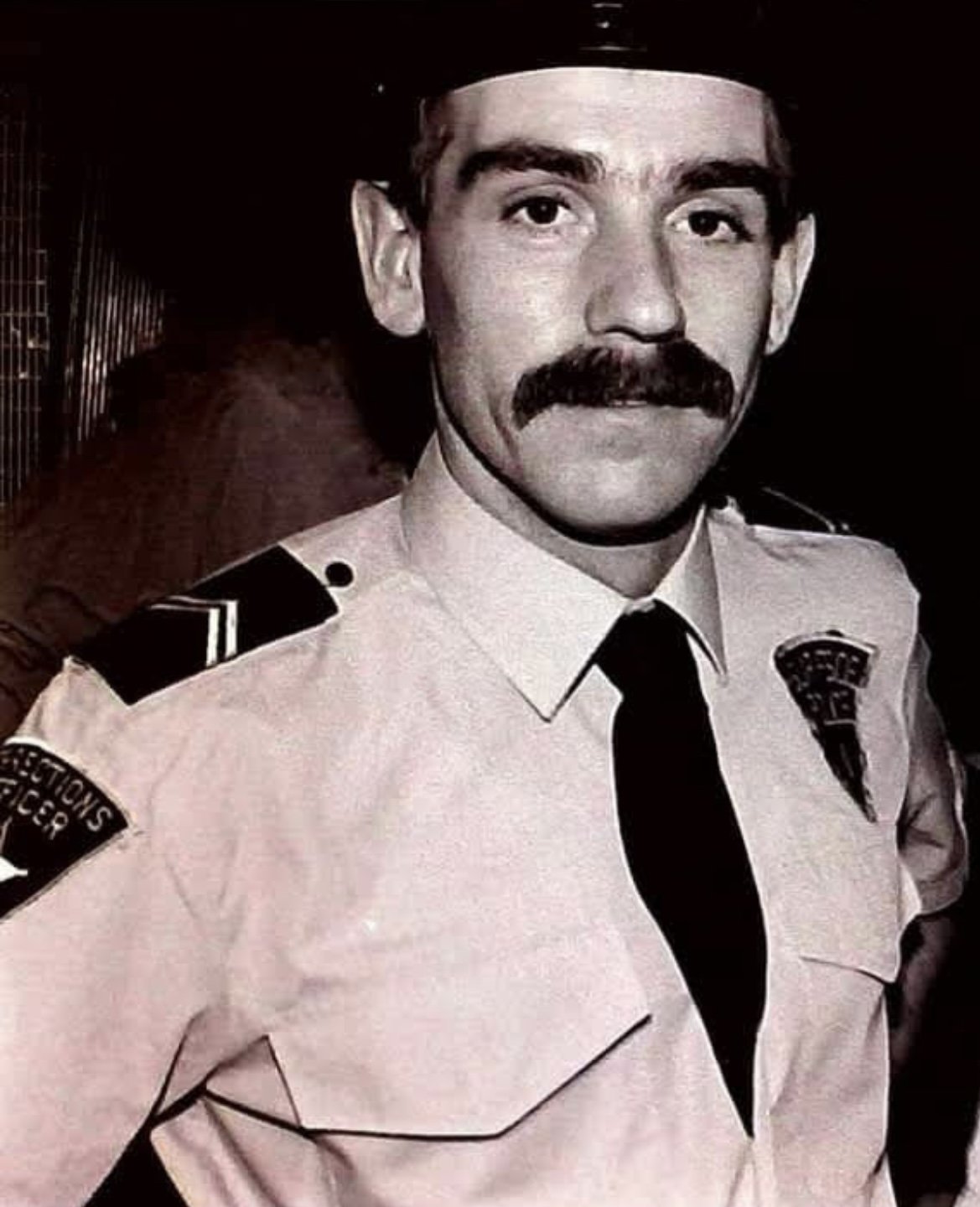
Carlton Youd - Roger’s Brother…
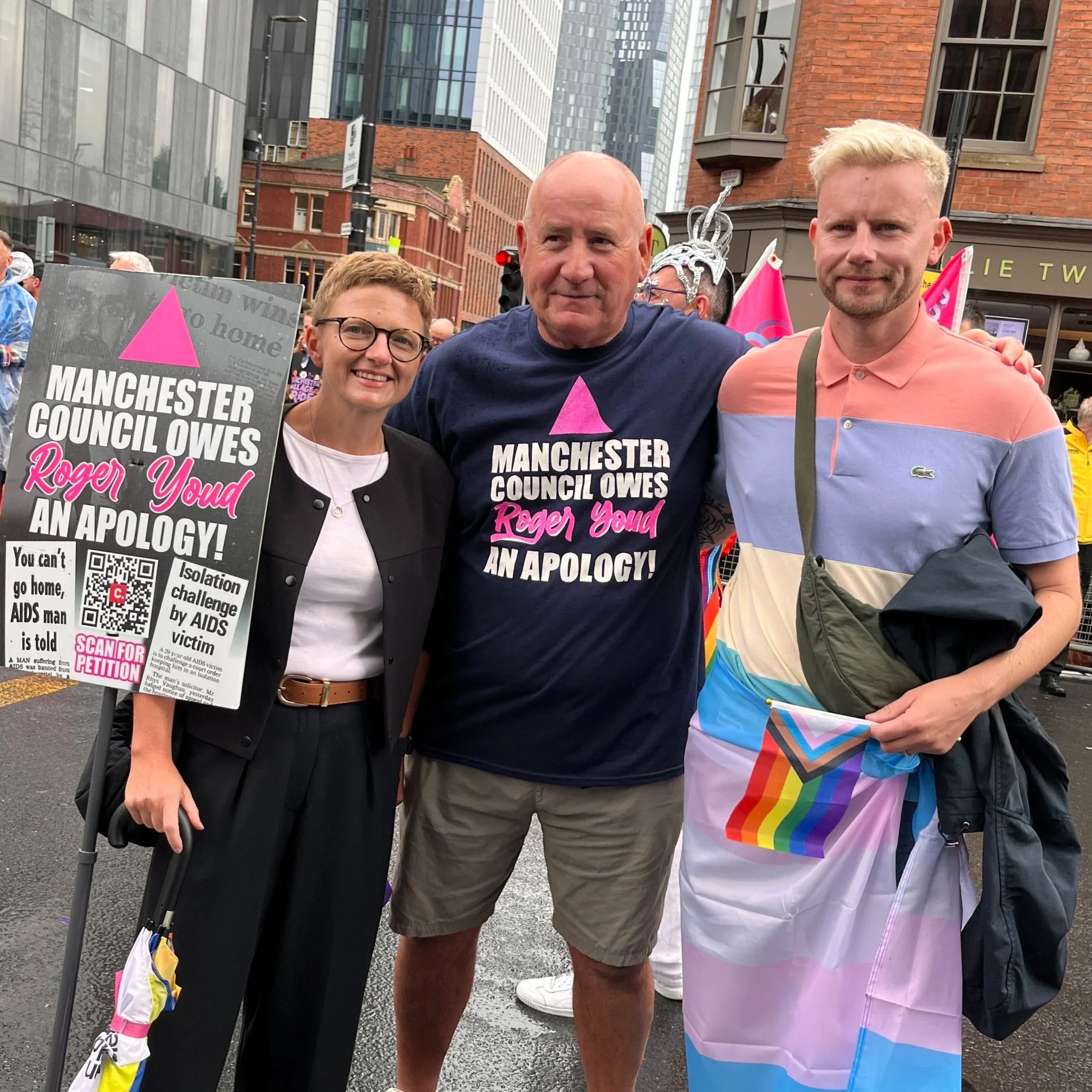
2026: Manchester Mayor, Carlton & Council Leader
It was a real privilege to speak with Roger’s brother Carlton, who offered clear, humane insight into Roger’s detainment, the toll it took on the Youd family and the quieter details of his brother’s life. Speaking with Carlton reminded me how strange it must feel for strangers to want to peer into what is usually private family life — yet his openness helped cut through the sensationalism that surrounded Roger’s unlawful detainment at Monsall Hospital in 1985.
The press sought to turn a legal and medical injustice into a lurid story that vilified Roger and his family, but Carlton’s recollections restored a sense of normality. Roger was an ordinary, highly educated man, living his life much like anyone else, and his AIDS diagnosis did not make him any less human. Carlton’s calm dignity and the family’s endurance underline how much was lost in the headlines, and how important it is to listen to those who lived the experience rather than those who exploited it.
Thank you to Carlton and the Youd family for sharing such personal insight into the life of a courageous young man. This generosity of spirit not only preserves Roger’s legacy but also strengthens the bonds of the HIV/AIDS and medical community that remembers and learns together, and ensures no such action is ever repeated.
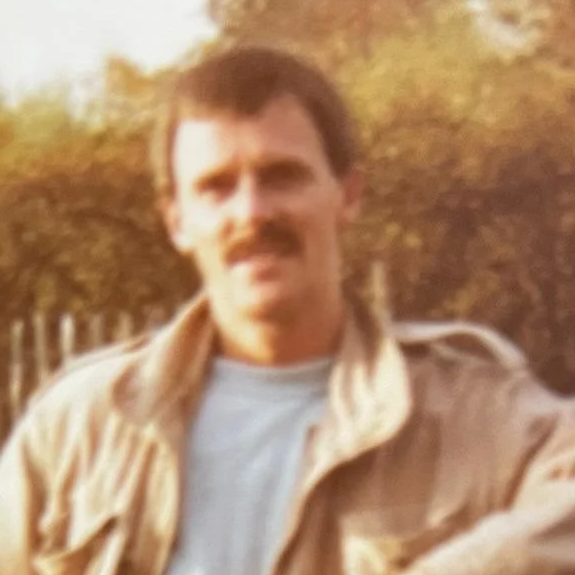
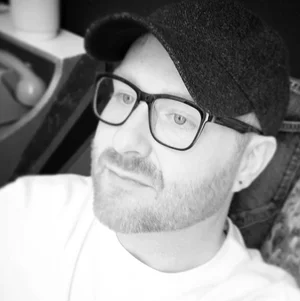
IAN, Roger’s close friend…
Ian reached out after stumbling across our initial podcast episode about Roger’s detainment at Monsall Hospital in 1985 and the way the press had covered it, keen to add his voice to a story that had been reduced to headlines. He explained that he and Roger had first met in as a ‘liaison’ that had failed — but, at Roger’s suggestion, they became firm friends.
The pair clicked instantly over a shared love of music and a delightfully zany sense of humour, often calling themselves “sisters”, it was a pairing that “…was the best friendship I’ve ever had with somebody” . Ian’s contribution as a close friend brings nuance and warmth to a narrative the media had flattened, revealing the quieter, truer rhythms of their friendship as two gay men in 1980s Manchester
“It was the best friendship
I’ve ever had with somebody.
And the best laugh
I’ve had with somebody”
-Ian, Roger’s friend
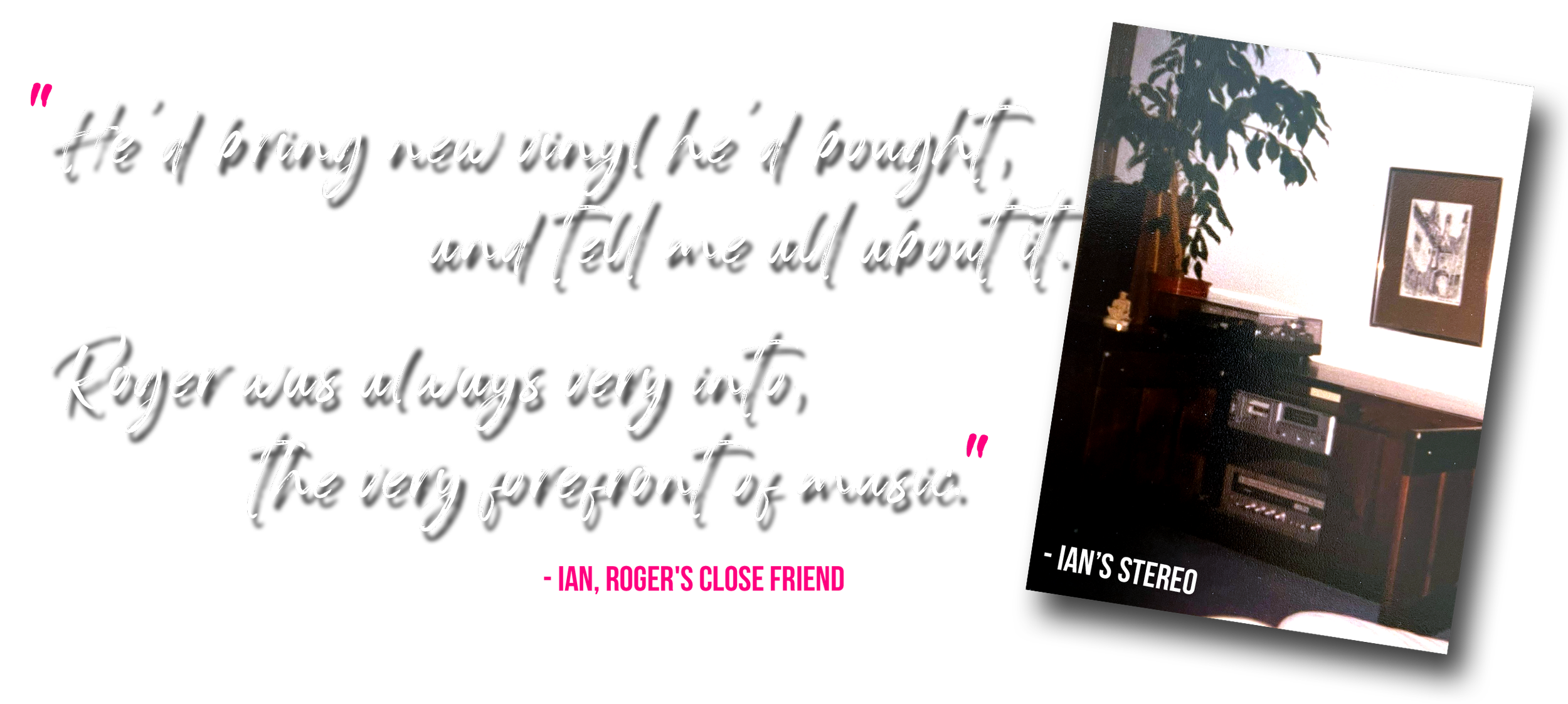

Paul Fairweather MBE
Friend of Roger and LGBT/AIDS Activist
Paul has been instrumental in gay rights activism since 1974 and in HIV/AIDS activism from 1984, playing a crucial role in establishing Manchester’s AIDS Line and co-founding the George House Trust, which has grown into a leading HIV charity; his decades of commitment to campaigning, support services and public education were recognised when he was awarded an MBE by the King in 2023.
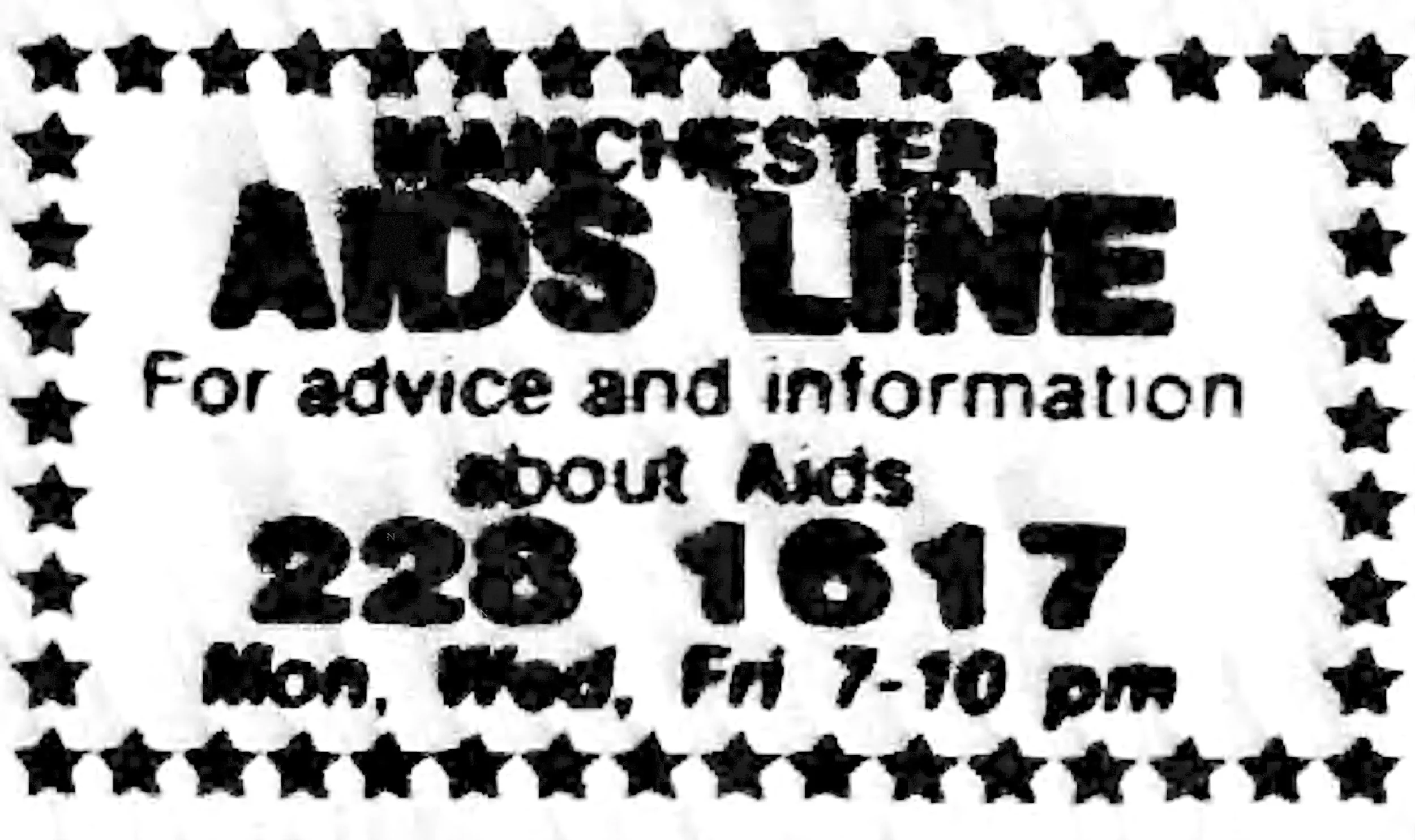
AIDS Line: Oct 1985
Knowing Roger Youd before his detainment, Roger contacted Paul confident that he would mobilise action to challenge his detainment at Monsall Hospital; Paul recounted organising the protest and picket outside Manchester Town Hall, where demonstrators carried banners and placards both opposing Roger’s detainment and asserting the rights and dignity of people living with AIDS at a time of fear, stigma and official neglect. Paul told me “It was a real contradiction that the Manchester council, that was probably one of the most progressive councils both on HIV and LGBT issues, was detaining someone for having HIV. I think they really hadn't thought it through and I think it was a panic overaction by some of the consultants and then, the council went along with it really”.


IN ORDER OF PODCAST EPISODE - CLICK TO ENLARGE (OPENS IN NEW WINDOW)


There was a sense of shock that Roger’s detainment had not been held in a private court, that the British press had been able to report the hearing on the same day; forty years on, with a raised eyebrow, it remains remarkable that his detainment made it into almost every newspaper from the East to the West Coast of the United States.




In October 1985, many weeks after Roger’s detention had been brought to an end by way of his successful appeal, two readers of the Manchester Evening News expressed sharply different opinions on the handling of the AIDS pandemic while referencing the action around Rogers detainment via the ‘postbag’ page.


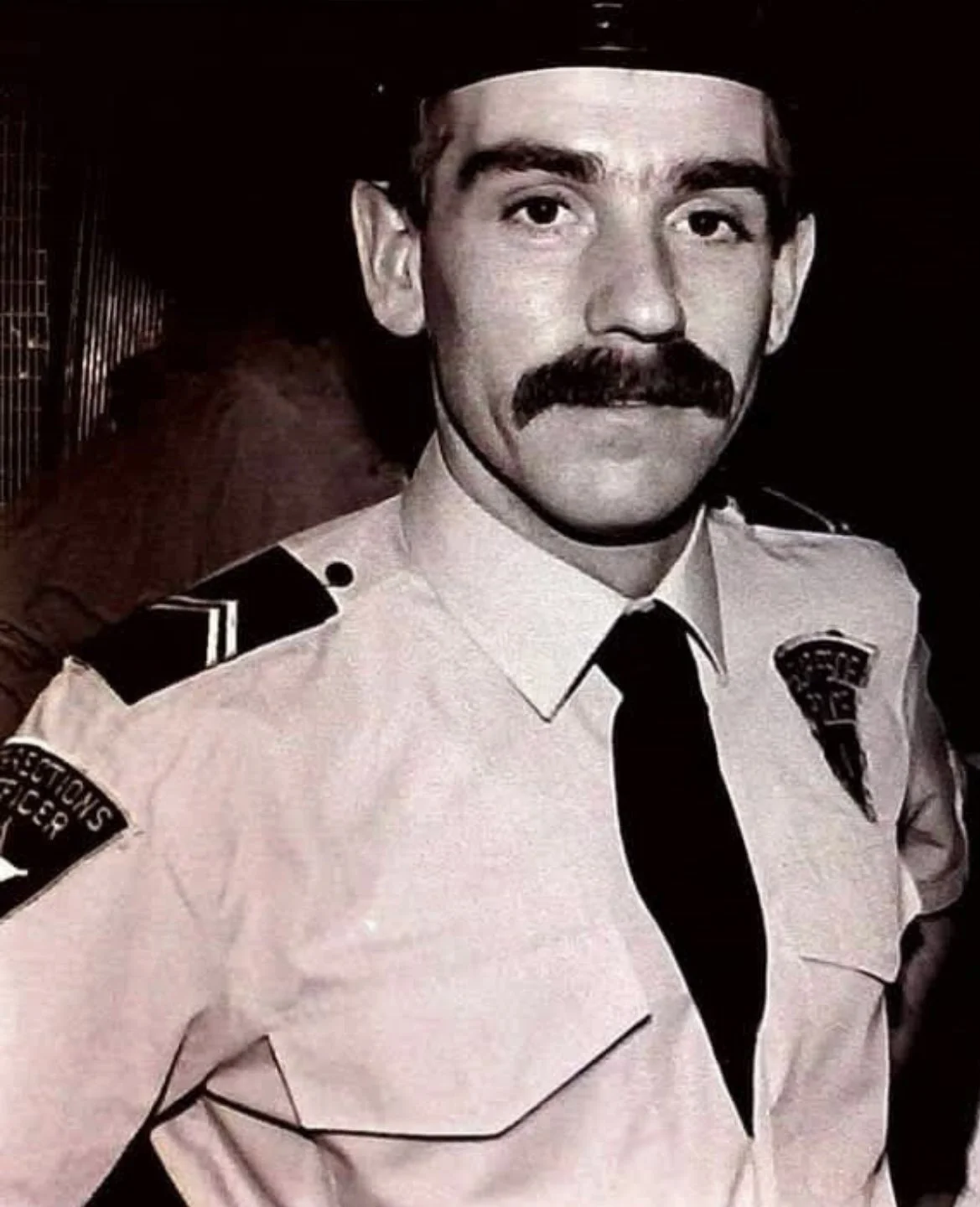


Roger George Youd was born on 22 May 1956 in Flintshire, Wales, to Nellie (née Hughes) and Joshua Spencer Youd. One of four boys, he had an elder brother Graham and another elder brother, James Duncan, who was born in 1951 but sadly died in 1952 aged 14 months; Roger was followed by his younger brother Carlton in 1960. The family suffered further loss when the head of the house, the boy’s father, Joshua ‘Spencer’ Youd, died in 1974 when Roger was 18, and their mother, Nellie, passed away in 1998, thirteen years after Roger himself had died.


38 Detention in hospital of person with notifiable disease
Where a justice of the peace (acting, if he deems it necessary, ex parte) in and for the place in which a hospital for infectious diseases is situated is satisfied, on the application of any local authority, that an inmate of the hospital who is suffering from a notifiable disease would not on leaving the hospital be provided with lodging or accommodation in which proper precautions could be taken to prevent the spread of the disease by him, the justice may order him to be detained in the hospital.
An order made under subsection (1) above may direct detention for a period specified in the order, but any justice of the peace acting in and for the same place may extend a period so specified as often as it appears to him to be necessary to do so.
Any person who leaves a hospital contrary to an order made under this section for his detention there shall be liable on summary conviction to a fine not exceeding level 1 on the standard scale, and the court may order him to be taken back to the hospital.
An order under this section may be addressed—
(a) in the case of an order for a person's detention, to such officer of the hospital, and
(b) in the case of an order made under subsection (3) above,
to such officer of the local authority on whose application the order for detention was made, as the justice may think expedient, and that officer and any officer of the hospital may do all acts necessary for giving effect to the order.
Section 38 taken from the original Public Health (Control of Disease) Act 1984

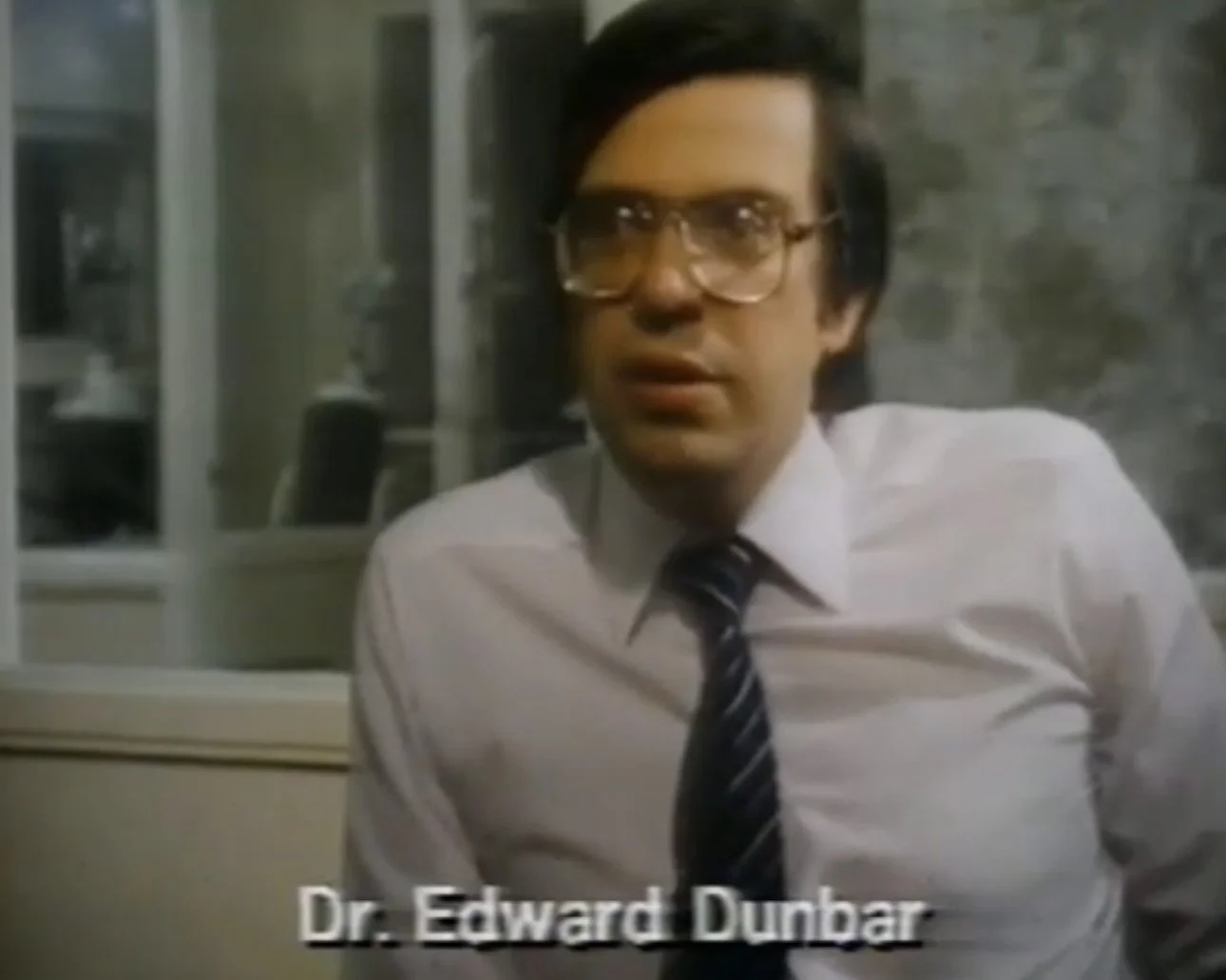
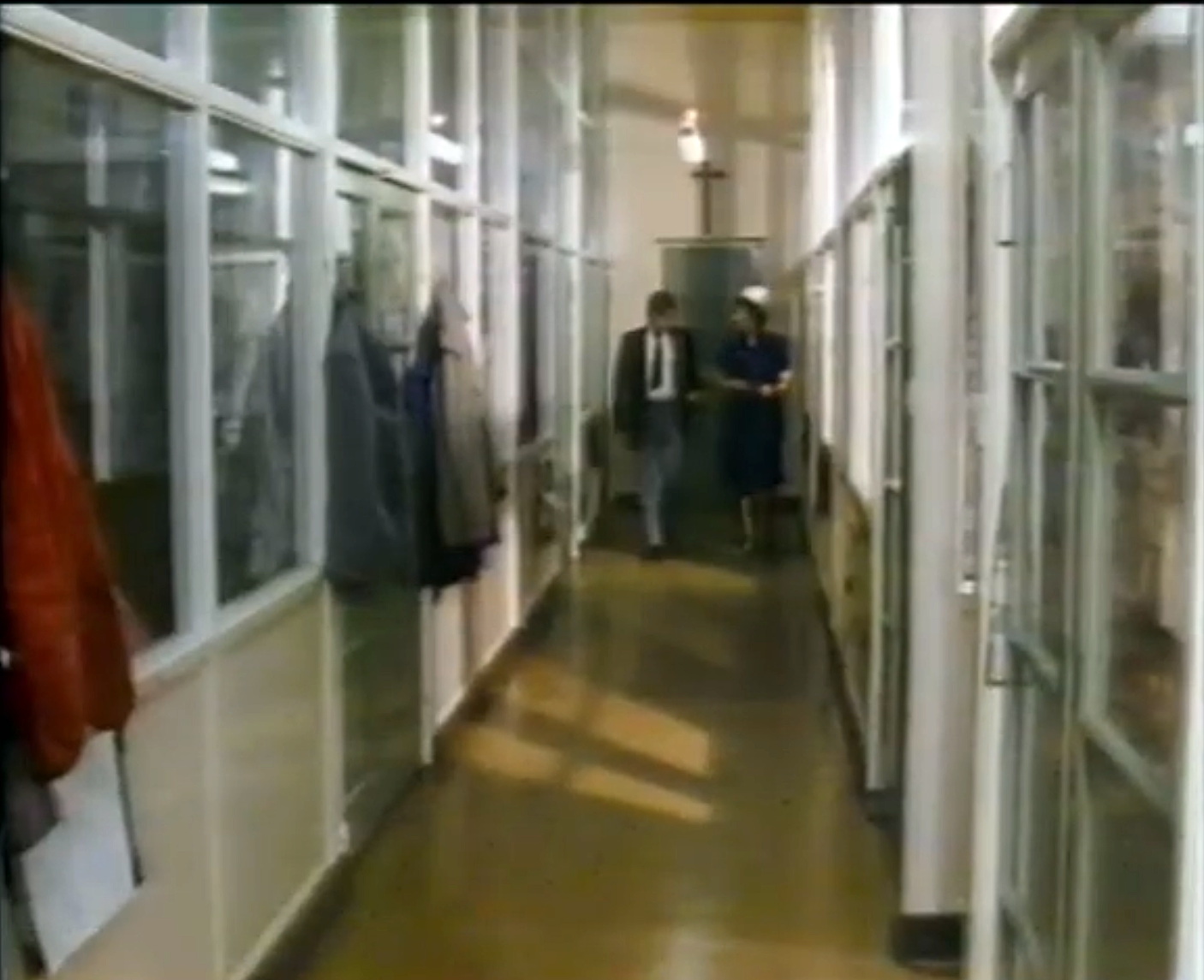
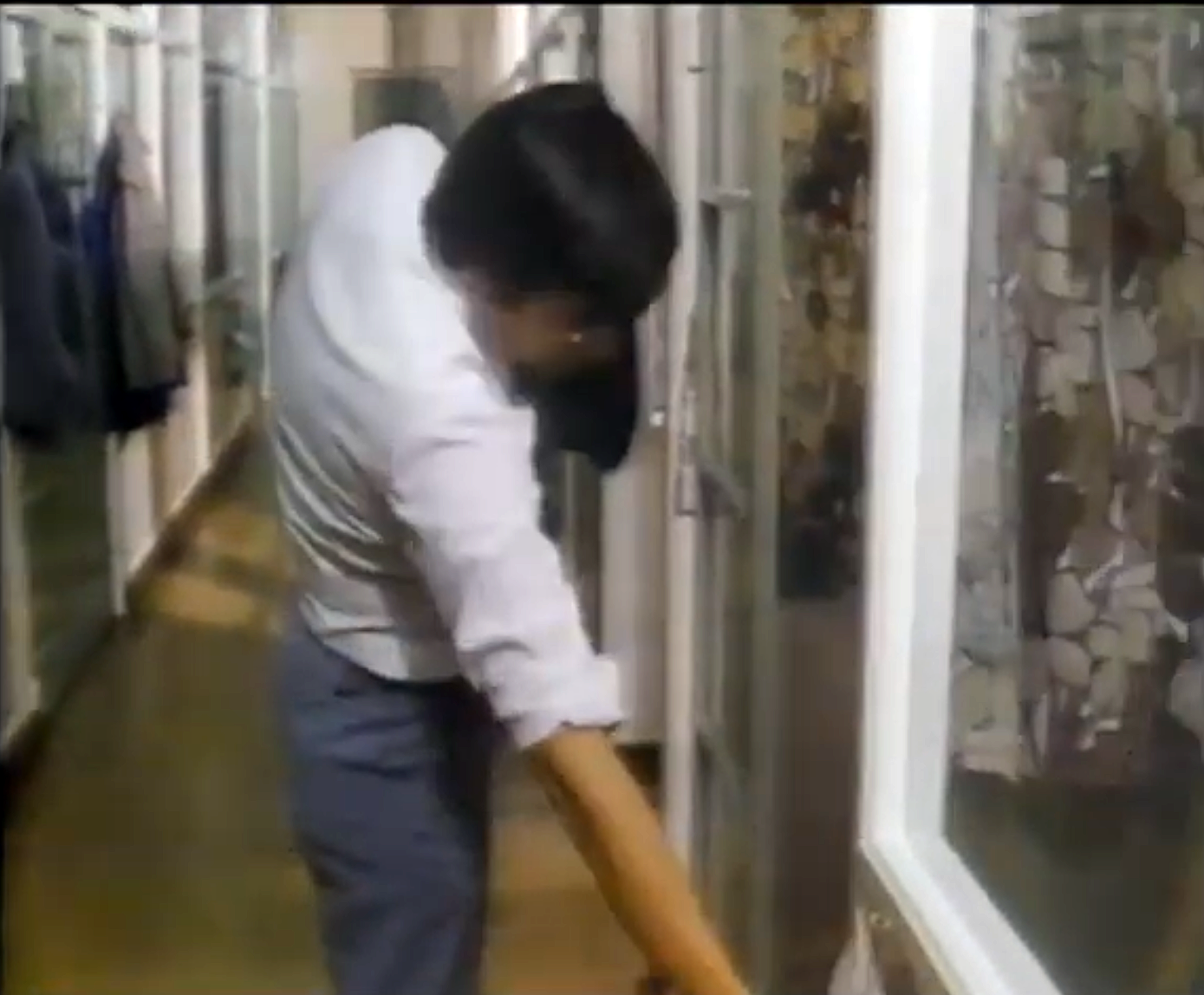
Roger’s detainment is briefly revisited in ITV’s TV Eye episode “AIDS and You,” broadcast on 7 November 1985, where archival footage and contemporary reporting in 1985 frame his case as emblematic of the era’s tension between public health measures and civil liberties.
At the time of recording (October 1985) and broadcast (7 November 1985), Roger remained a patient at Monsall, having chosen to stay there voluntarily after successfully appealing against his unlawful detention. The footage confronts his consultant, Dr Edward Dunbar, asking, “Looking back at the controversy that your actions stirred up, would you react any differently now if that same case arose?” — a question that presses at professional responsibility and the tension between clinical judgement and public scrutiny. I can’t help but wonder whether Dr Dunbar’s response would be different today, had he still been alive to answer it.
ROGER YOUD: Aired 7 Nov 1985, ITV [Thames TV/Freemantle]


BMJ: Click to open article
On the 19 October 1985 the British Medical Journal published an article also questioning the validity of section 38 being applied in the case of Roger Youd.
The legal correspondent seems to have the same questions we had when trying to make sense of section 38 when HIV/AIDS was/is not a “notifiable disease”. You can read the one page article HERE.


Manchester News 14 Sep 1985
DR. ANNA ELIZABETH JONES, in 1985 was Manchester’s Cheif Medical Officer and the woman behind the application for the local authority to detain Roger Youd against his will.
It would have been interesting to ask her, perhaps quietly and directly, why she made the choices she did; given her standing as a highly experienced doctor of infectious diseases and her appointment as Manchester’s Chief Medical Officer, one would expect her clinical judgement and statutory responsibilities to align with established public health principles and legislation at the time.
We’d expect, as they did for solicitors, barristers and AIDS charities, that public bodies would repeatedly and unambiguously state that AIDS was not a “notifiable disease” and that the order obtained by Dr Anna Jones was unlawful; yet when activists and even the Manchester Evening News make the same point, it inevitably raises troubling questions about Dr Jones’s judgment and suitability for office.
Silence or equivocation from official quarters looks less like prudent legal caution and more like a panicked overreaction, especially when viewed against earlier public statements: nine months before she sought the order on Roger Youd, she was quoted in the Manchester Evening News on 26 January 1985 discussing a story of two AIDS patients in Monsall Hospital:
“Dr Elizabeth Jones, Manchester’s medical officer for environmental health said a strong case could be made out for making AIDS a notifiable disease” — a status required if an application for detainment under section 38 of the Public Health (Control of Diseases) Act 1984 were to be pursued — which makes it plain she understood the legal constraint, an admission that forces the question of motive, because ignorance can be dismissed: was she driven by genuine public‑health precaution, political pressure, moral panic, or an intent to expand statutory power over marginalised groups, and as Roger’s solicitor and barrister outlined at the appeal, she submitted no coherent evidence other than an alleged letter from the consultant.

Mancunian Gay News Sep 1985
Dr Anna Jones acted with problematic motives although, with the above insight her understanding of the legal and ethical framework governing communicable diseases are open to scrutiny. What was proved was that her decision to pursue the order was the wrong one given the damage it threatened: in 1985, anyone testing positive for, or presenting with, AIDS — and later HIV — risked detention if another consultant like Jones made an unlawful application that was not scrutinised by a competent magistrate.
Roger’s case exposed how a single, inadequately informed or improperly motivated clinician could weaponise public-health powers, inflicting stigma, fear and potentially irreversible harm on vulnerable patients, and highlighted urgent deficiencies in oversight, legal safeguards and professional accountability.
It was alleged that Dr Jones appreciated the sensitivity and patient confidentiality surrounding AIDS in 1985 and that she requested the court hearing on her application be held in private (closed court), but claimed the court rejected that request.
The ‘Mancunian Gay’ weekly newspaper reported in September 1985:
“Enter Dr. Elizabeth Jones, Medical Officer for Environmental Health employed by Manchester City Council. Dr Dunbar, in a panic that the patient would discharge himself, called upon Dr. Jones to apply to Manchester City Magistrates for a court order, under the Public Health and Communicable Diseases Act 1984, to detain the patient in Hospital for three weeks.
Dr. Jones, in considering whether to apply for the Order, contacted Councillor Keith Bradley, Chair of Manchester's Environmental Services Committee, the body responsible for making such applications, and Dr. Jones employer. Without consulting other councillors and without being aware of the identity of the patient or the illness, Cllr. Bradley agreed to the detention.
The granting of the order immediately caused a national furore by all people concerned with the care and treatment of AIDS patients owing to the fact that this was the first time in Western Europe that such an order had been issued”.
Three weeks after Roger won his appeal against his detainment, the Manchester Evening News reported on 16 October 1985 that the Labour council had “pledged” not to pursue similar orders against future AIDS patients, despite the fact that AIDS was not a notifiable disease and could not support such legal action.
The paper’s coverage highlighted a tense compromise: local authorities, under public and political pressure to protect community health, sought to reassure residents while critics warned the pledge masked a troubling readiness to use coercive measures against a vulnerable group. Medical professionals and civil liberties campaigners stressed that compulsory orders risked fuelling stigma and deterring people from seeking testing and care, and they urged clear public health guidance grounded in evidence rather than fear.
Interestingly, within the article they reported “The city’s now retired medical officer for Environmental Health, Dr Anna Jones…”.
“Now retired”? Coincidence — or perhaps a convenient euphemism for a forced exit, given the serious questions surrounding her conduct and the national furore over the unlawful detention of Roger Youd.
The claim Dr. Jones was “now retired” presented a departure without scrutiny, sanitising any accountability: Roger, the Youd family, supporters and readers deserved clear answers about whether her departure was voluntary or the consequence of professional failings, internal pressure or disciplinary measures following what many have called an act of ‘unlawful detention’.
Dr Anna Jones became an administrative medical officer in Manchester in 1962, rising through the ranks to deputy medical officer and, by 1985, to Manchester’s chief medical officer, where she oversaw major public health initiatives; her tenure later attracted controversy after she issued a detention order against a patient with AIDS that was deemed unlawful following a successful appeal by Roger’s barrister, and where she swiftly “retired” soon after the ruling.
Jones died on 17 August 2023.


Everybody I spoke with could only conclude that the order obtained against Roger was a panic decision rather than one grounded in reasoned malice; that view was echoed by the press, Roger’s solicitor and his barrister at the time of his appeal. I, like many others, perhaps feel the haste and deceitful manner in which the order was secured spoke of ‘panic’ — an urgent, ill-considered reaction — rather than a deliberate attempt to harm.
I have never been one to loosely connect the dots or speculate, however the contemporary coverage around two AIDS patients at Monsall Isolation Hospital between January and March 1985 perhaps helps explain why the consultant and the local authority might have panicked.
Both men, in their thirties, were publicly acknowledged by the hospital without being named, yet the Rochdale patient attracted disproportionate attention: the Rochdale Observer’s 30 January 1985 headline—“AIDS victim draws up contact-list”—framed him in a patient-zero narrative and emphasised his alleged wider travel, inviting intrusive inquiries and public alarm. In that febrile media climate, a local paper pushing an investigative angle would have amplified fears, pressured health officials for immediate action and disclosure, and made containment decisions appear urgent—even if, clinically, careful measured responses were more appropriate.
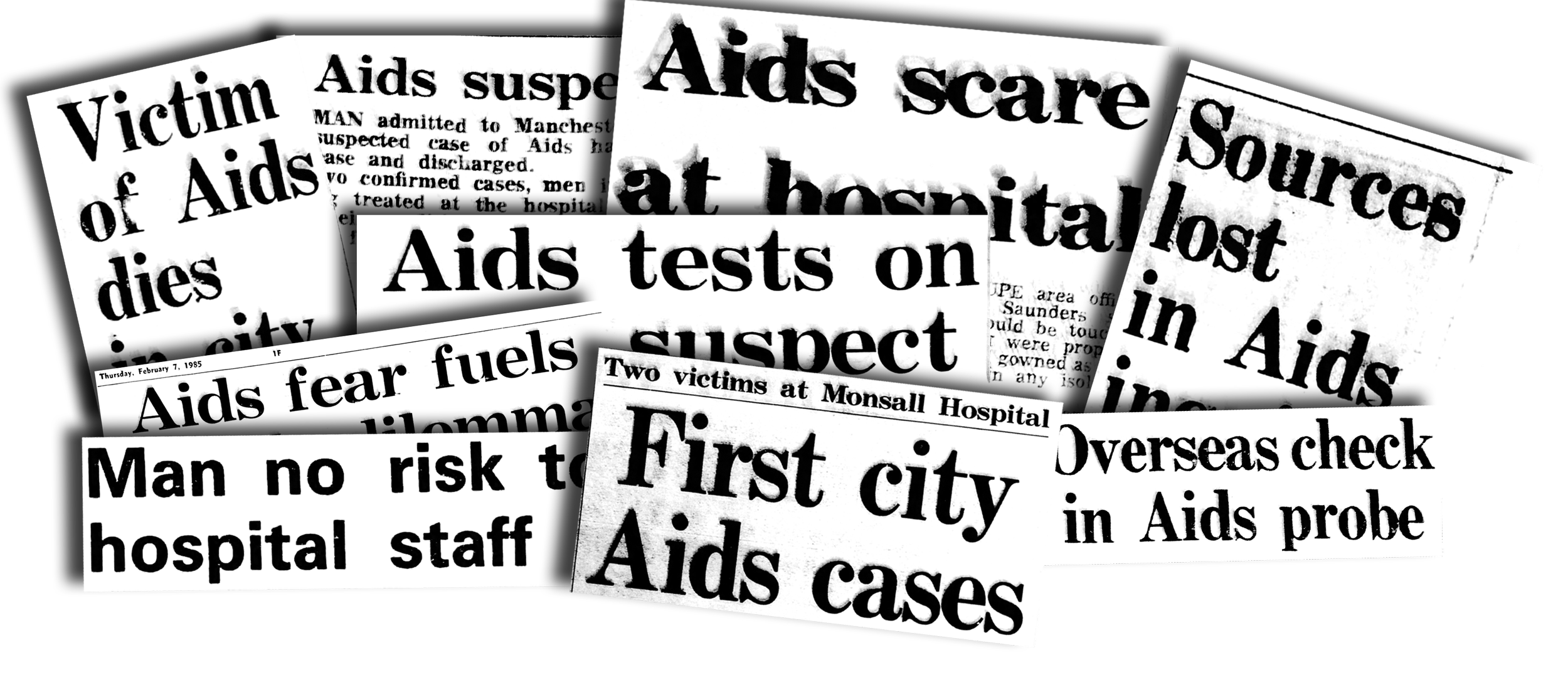
MONSALL HEADLINES: a handful of press from January-March 1985 concerning Monsall Hospital
One of the men (likely the Manchester man), like Roger, had expressed a wish to leave Monsall Hospital and go home only months (January 1985) before Roger’s own detainment (September 1985). A request the hospital acceded to given they later stated there had been an improvement in his health, and which was reported in the Manchester Evening News on 29 January 1985, a piece likely to unsettle readers and Mancunians anxious about a man with AIDS mingling with the general public.
Monsall Hospital 1985
Sadly, within days of his discharge the man rapidly deteriorated, was readmitted to Monsall Hospital and died, prompting the Manchester Guardian to run the stark headline “AIDS death — why victim went home”, noting at the top of its report that “the hospital authorities have defended their decision to allow the patient home for a few days.” The press probing the hospital exposed the fraught tension then between patient autonomy, institutional public relations and widespread fear and misinformation about AIDS, amplifying controversies about hospital policy, media responsibility and community anxieties in Manchester.
It was evident that media scrutiny had relentlessly pressed Monsall officials to ‘defend’ why they had permitted the man to go home, suggesting — with insinuations that an infectious AIDS sufferer might be circulating within the Manchester community — or perhaps that hospital negligence had contributed to his rapid deterioration and eventual death. That intense public and press pressure, and the fallout from the Hospital allowing the patient to ‘go home for a few days’, perhaps helps explain why only six months later Roger’s consultant and the chief medical officer, haunted by the consequences of the previous decision, reacted with alarm when Roger expressed a wish to merely return home.
In the absence of direct testimony from those who sought and obtained the order against Roger, leaves us with the most plausible explanation for the ‘panicked decision’ that precipitated their urgent steps to obtain a detainment order in Roger’s case as a defensive, risk‑averse response rooted in fear of repeating the intense and perhaps unfair scrutiny the hospital faced when it allowed the earlier patient (possibly the Manchester man), at his own request, to be discharged and allowed to go home. So when Roger too expressed a desire to go home, they reacted pre‑emptively to avoid a second wave of adverse attention, framing decisions more around perceived reputational risk than strictly medical or legal criteria.



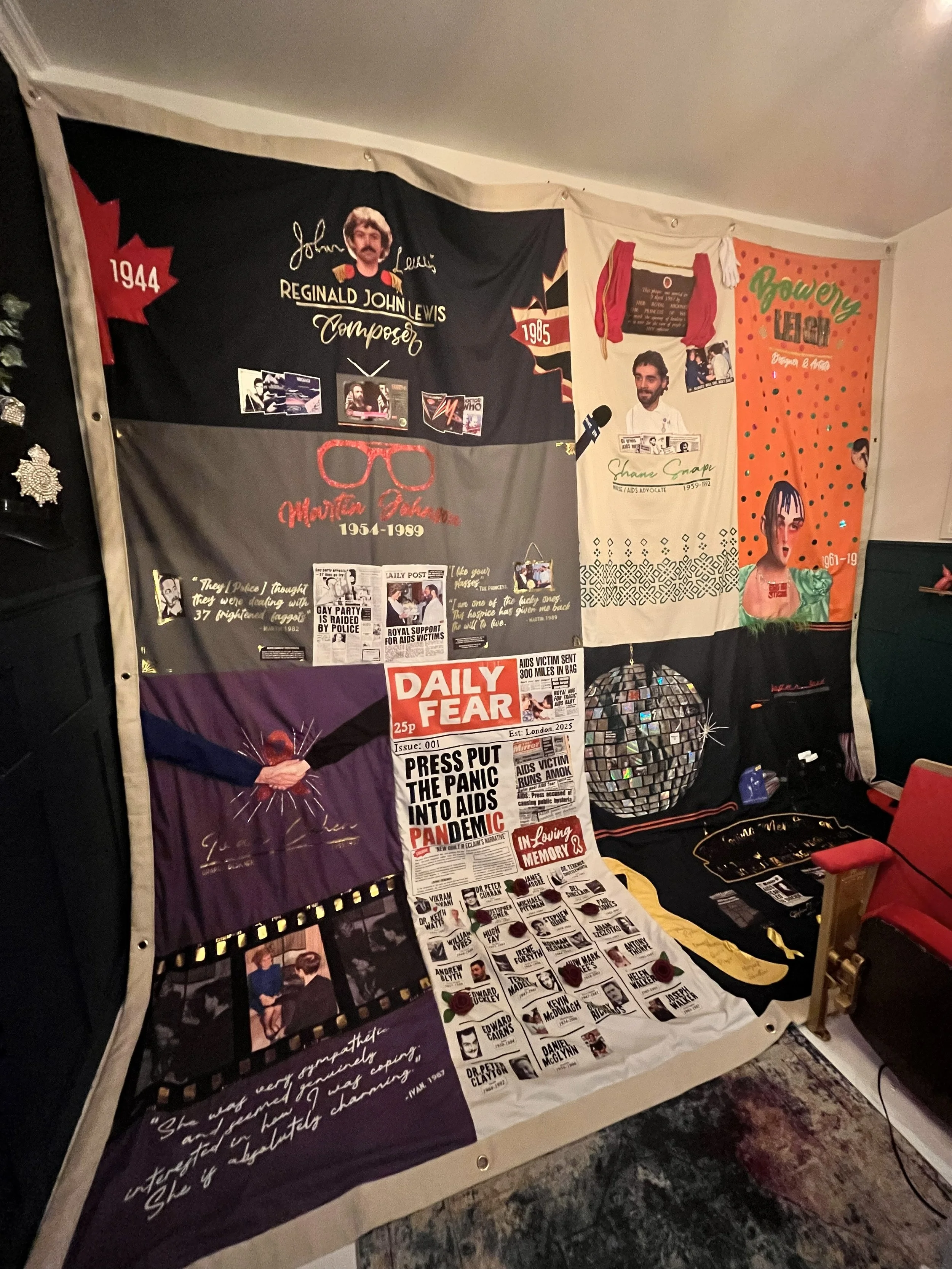
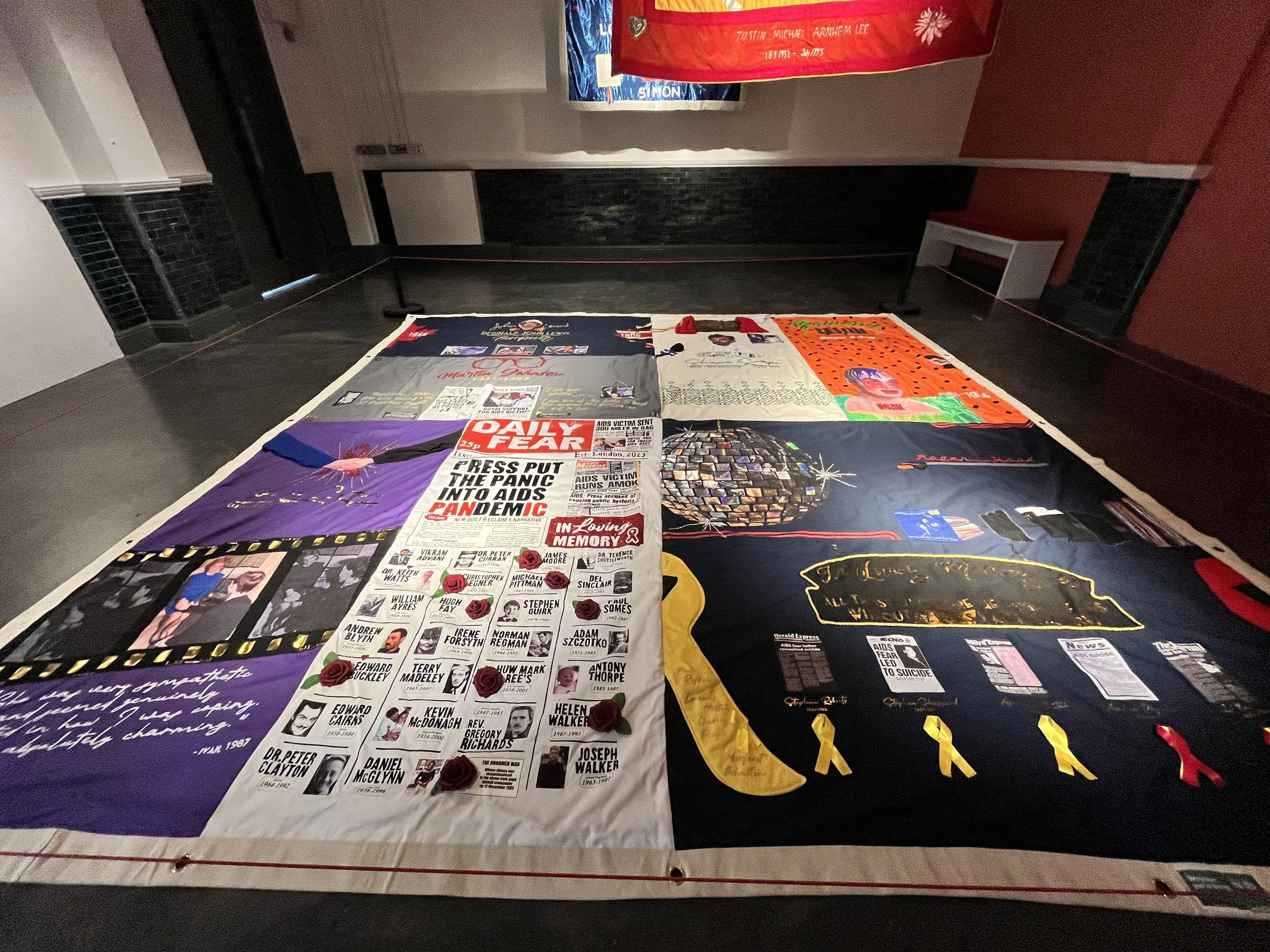
On hearing the UK AIDS Memorial Quilt was accepting new panels, Roger was at the top of my list as I planned eight quilts for World AIDS Day 2025.
Quilts are usually made by those who knew a life intimately, but my knowledge of Roger Youd began only with the media coverage of his unlawful detainment in 1985, so I pieced together his Quilt from conversations with friends and family. I used a mirror ball motif to capture both his aspiration to be a DJ in Manchester and the idea of mirrors as reflections — fragments that reveal who he was beyond the media storm that surrounded his detainment — stitching those gleaned memories into a single, luminous quilt of remembrance.
His name gleams in red diamantes that catch the light and mirror his effervescent spirit, the ruby tone nodding to his Welsh roots while the twinkling stones suggest constant motion and joy. Beneath, where dates might usually be set, in gold the inscription reads “Lover of Vinyl Music,” stitched below the textured arm of a record player and a neat stack of vinyl records, beside gym gear and the shared pints of Guinness he enjoyed with his friend Ian.
The single ‘Saving all my Love’ by Whitney Houston lies within the design, quietly marking the date of his untimely passing at just 29; scattered across the mirrored panes of the disco ball, the Welsh Dragon as a nod to Roger’s birthplace. Lady Justice appears, scales balanced evenly with the word ‘Betrayal’ stretched across both plates, a stark reference to those who failed Roger and the family during his unlawful detainment; nearby, two clippings note his detention at Monsall Hospital and the subsequent appeal to which he won. An image of his Manchester home sits with equal weight — the modest terrace where he had rooted himself — alongside the ‘Reflections’ album cover by Evelyn Thomas, the Spin-Inn record shop façade and the familiar carrier bag from the shop that Roger no doubt used to carry his new purchases.
NEW QUILT: 2025
The insight in these panes is only available when you draw near, a deliberate intimacy that frames privacy as a permission—you must get up close to Roger’s quilt to get a brief insight into who he was. His name appears slightly smaller for the same reason, tucked modestly into the composition so that revelation requires proximity; from a distance it reads as a discreet signature, almost a whisper. From across the room, however, his quilt seizes the eye: a giant mirror ball scattered with hand stitched diamante fragments that catch and throw light, a sparkling shorthand for a life lived vividly. That distant flash announces him before the details are read, while the quiet typography and the need to approach invite a more careful, personal encounter, balancing spectacle with the tender work of discovery.
Given the entire Quilt measures 12ft x 12ft, Roger’s positioning within it is deliberate so when on display it can be observed at eye level.
Further reading - BLOG POST: New AIDS Quilt WAD25
UPDATE: 23 DEC 2025

For Manchester City Council.
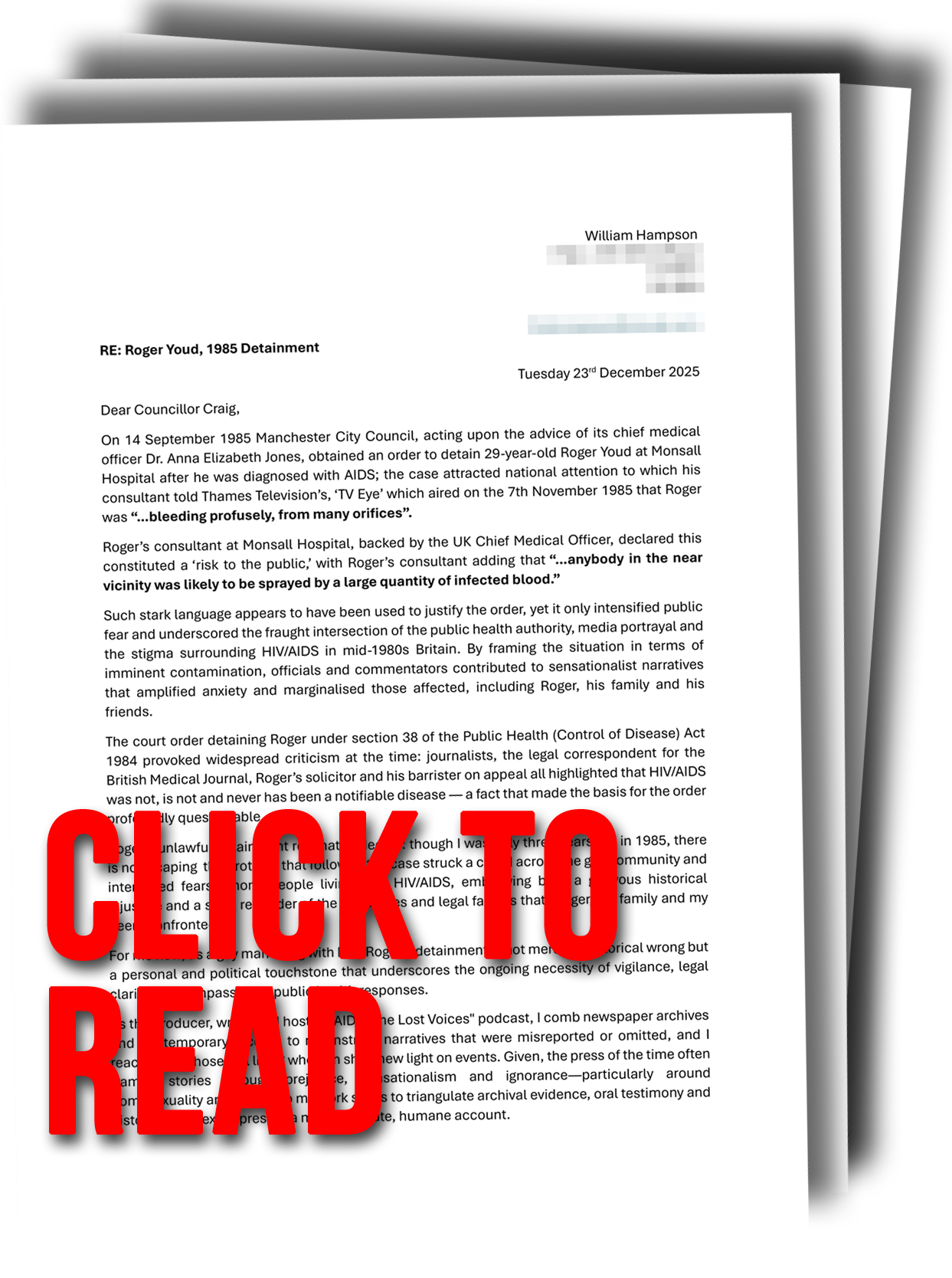
On 23 December 2025 I wrote a three‑page letter to the current leader of Manchester City Council, Councillor Craig, detailing research and testimony from Carlton Youd that confirm Roger Youd and the Youd family never received an apology for his forced detainment. Both Roger’s solicitor and barrister at the time, and reporting in the Manchester Evening News, maintained that HIV/AIDS was not — and never has been — a notifiable disease that could lawfully justify the detainment order imposed on Roger.
Nick Harris of Manchester City Council, who in 1985 appeared on TV Eye in connection with the coverage of Roger’s detainment, publicly asserted that the council would never invoke the contested legislation again; yet despite that assurance—and despite critiques from myself, others, and publications such as the British Medical Journal that the law had been used unlawfully since HIV/AIDS was not a notifiable disease—Harris and the council stopped short in that interview and subsequent press statements of offering an unambiguous apology to Roger then or, posthumously, to the Youd family.
Forty years on, speaking with Roger’s brother, there remains a raw sense of betrayal at how Roger, his family and those closest to him were treated; that hurt has not dulled with time. The meaning of apology has shifted over the decades — it is no longer a sign of weakness but a necessary step toward restoring dignity and beginning repair after a serious wrong. It is for that reason my letter to Manchester City Council urged them to publicly apologise: a genuine acknowledgement from the organisation that sought the detainment order could go some way to easing the pain and would allow Roger’s loved ones to remember him without the persistent sting of being let down by the very authority that should have acted with compassion and care, instead of fear and panic.
“Thank you for your email to the leader of Manchester City Council, Cllr Bev Craig.
Your query is receiving attention and a representative will be in contact with a fuller response as soon as possible”
UPDATE: 4 February 2026
I sent a follow up email but have received no response.
UPDATE: 6 June 2026
Quilt 47: Roger Youd
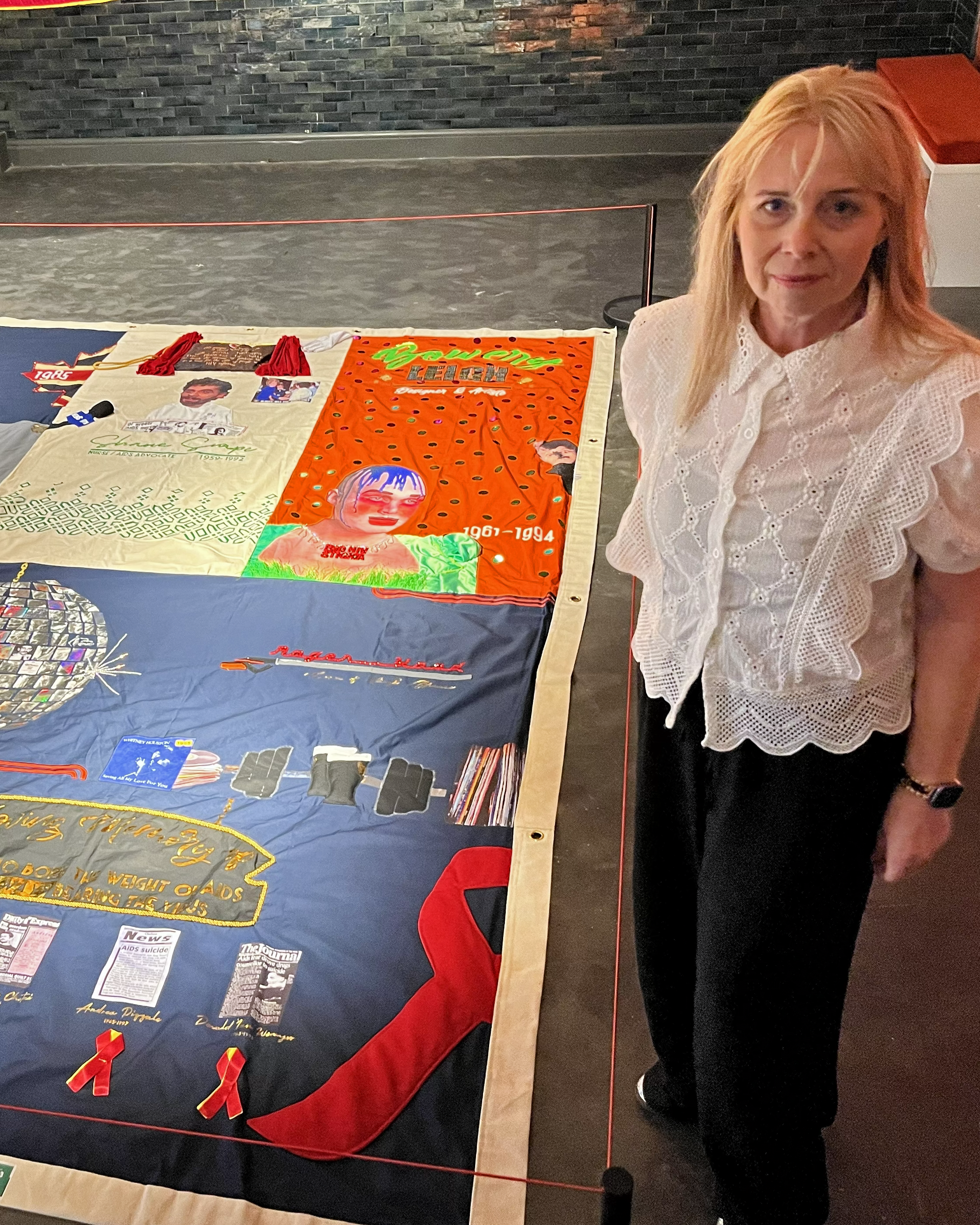
Quilt 47: Catherine & her uncle’s panel
Roger’s Panel on the AIDS Quilt UK is part of Quilt 47, of which had its first display alongside the entire UK AIDS Quilt in Wakefield on 3 - 7 June 2026 and its next stop will be three weeks at the Glasgow Tramway in Scotland from 12-27 September 2026.
For the first public display I was thrilled to meet Roger’s family who had travelled from Wales. I first met Roger’s niece Catherine and her sons, Roger’s great-nephews, and though his detainment was mentioned it was Catherine’s memories of her Uncle Roger that filled our afternoon together. Catherine was 15 at the time of Roger’s untimely passing, yet she recalled him vividly and produced a letter he had written in response to hers, penned from Ward 11 of Monsall Hospital the day after his detainment.
It is a lovely, distinctly uncle-ish letter: brotherly advice about her upcoming exams, a promise to treat her to a trip to Manchester and—if she did well—a theatre show or the pictures. Roger shared the last film he watched and the last record he bought, and even the small domestic triumph of repairing the tape deck on his stereo so he could transfer some music for her. Catherine is considering sending a copy to be placed in the quilt archive, a quiet, poignant way to keep Roger’s memory alive.
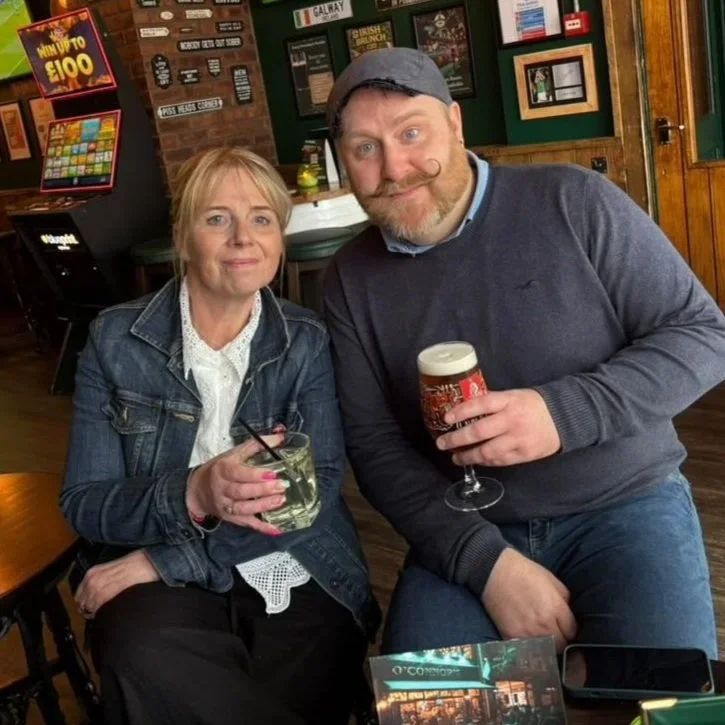
At the quilt we met a Ward Sister from a London hospital AIDS ward who recalled Roger’s detainment, widely reported in the news in 1985. After visiting Roger’s panel we headed to the Wakefield Exchange quilt display and were deeply moved by the quilts, Catherine pointing out the number of panels memorialising babies and small children. Catherine signed the memorial book and we then made our way to a nearby pub to raise a glass in Roger’s memory. One of her sons, who shares Roger’s passion for vinyl records and music, told us he still regularly browses Roger’s vast collection, stored at his grandfather’s house — over 40 years since Roger last spun a disc.
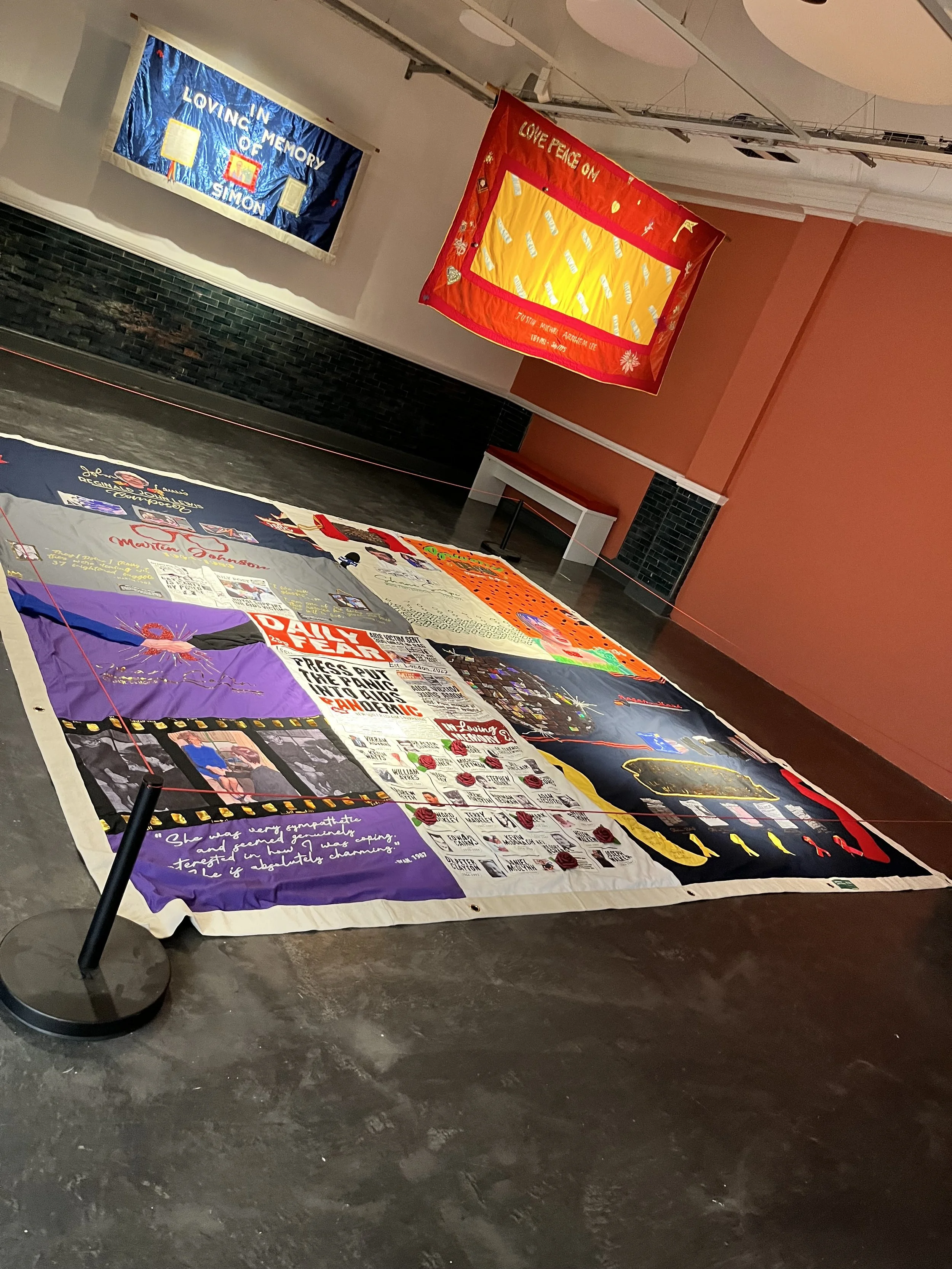
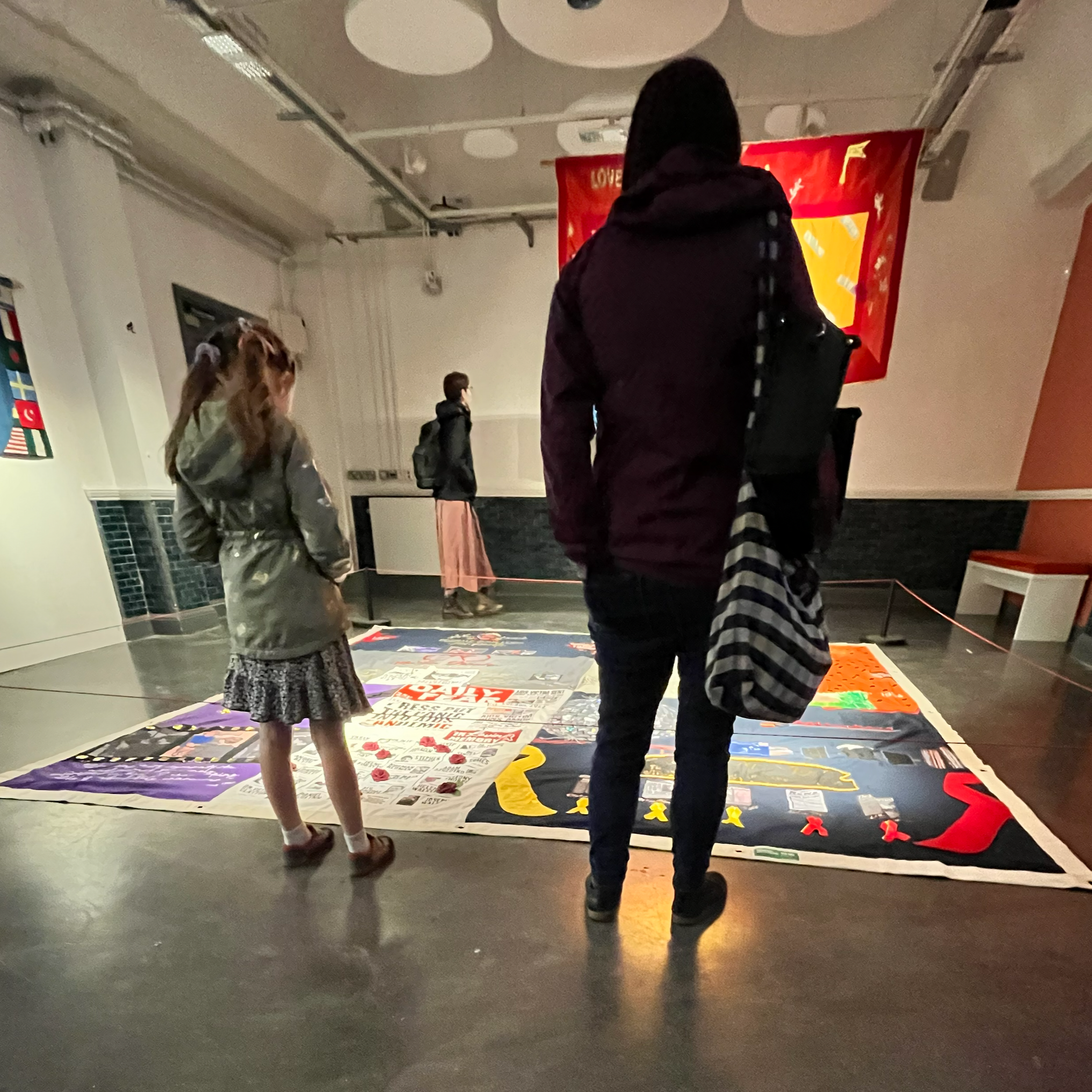
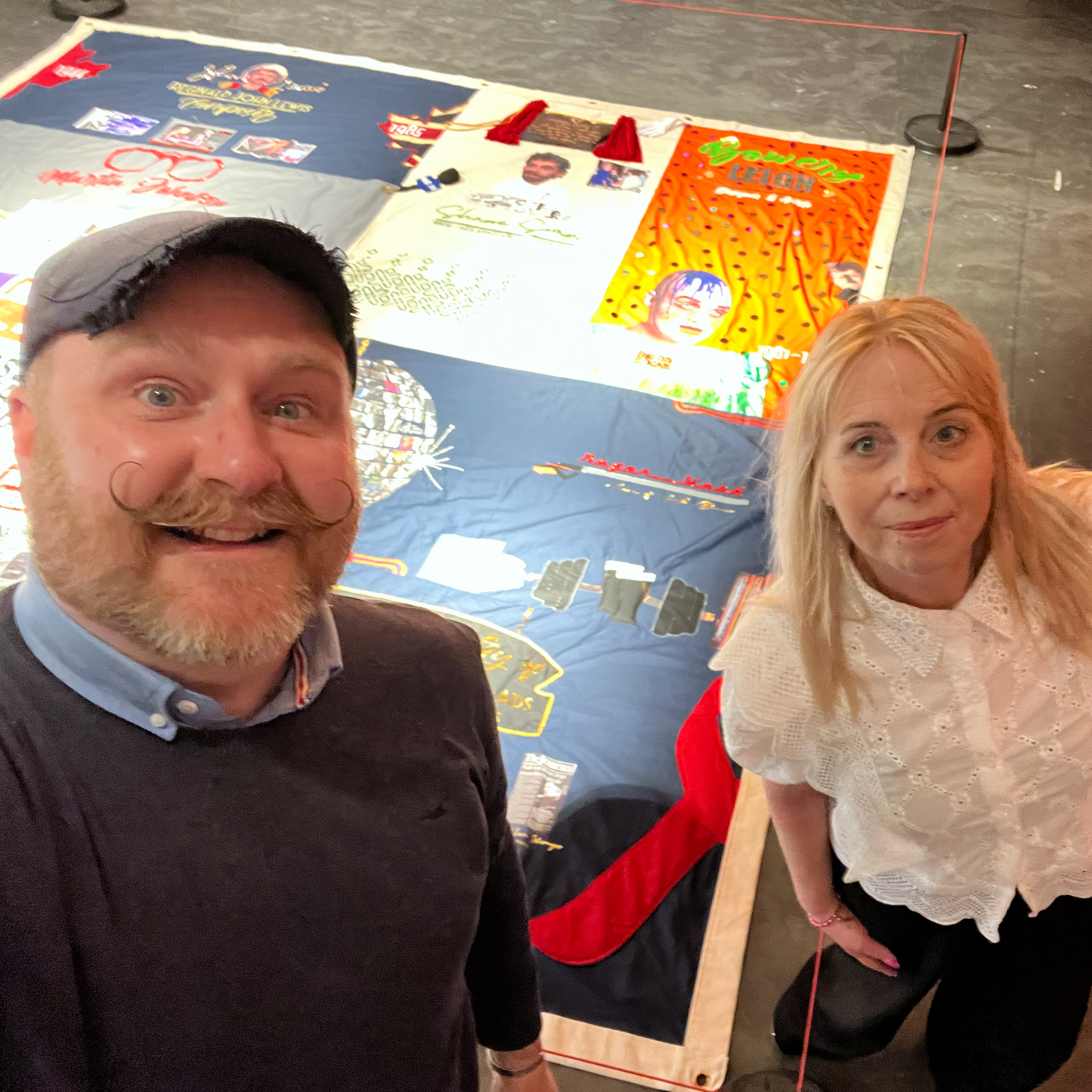
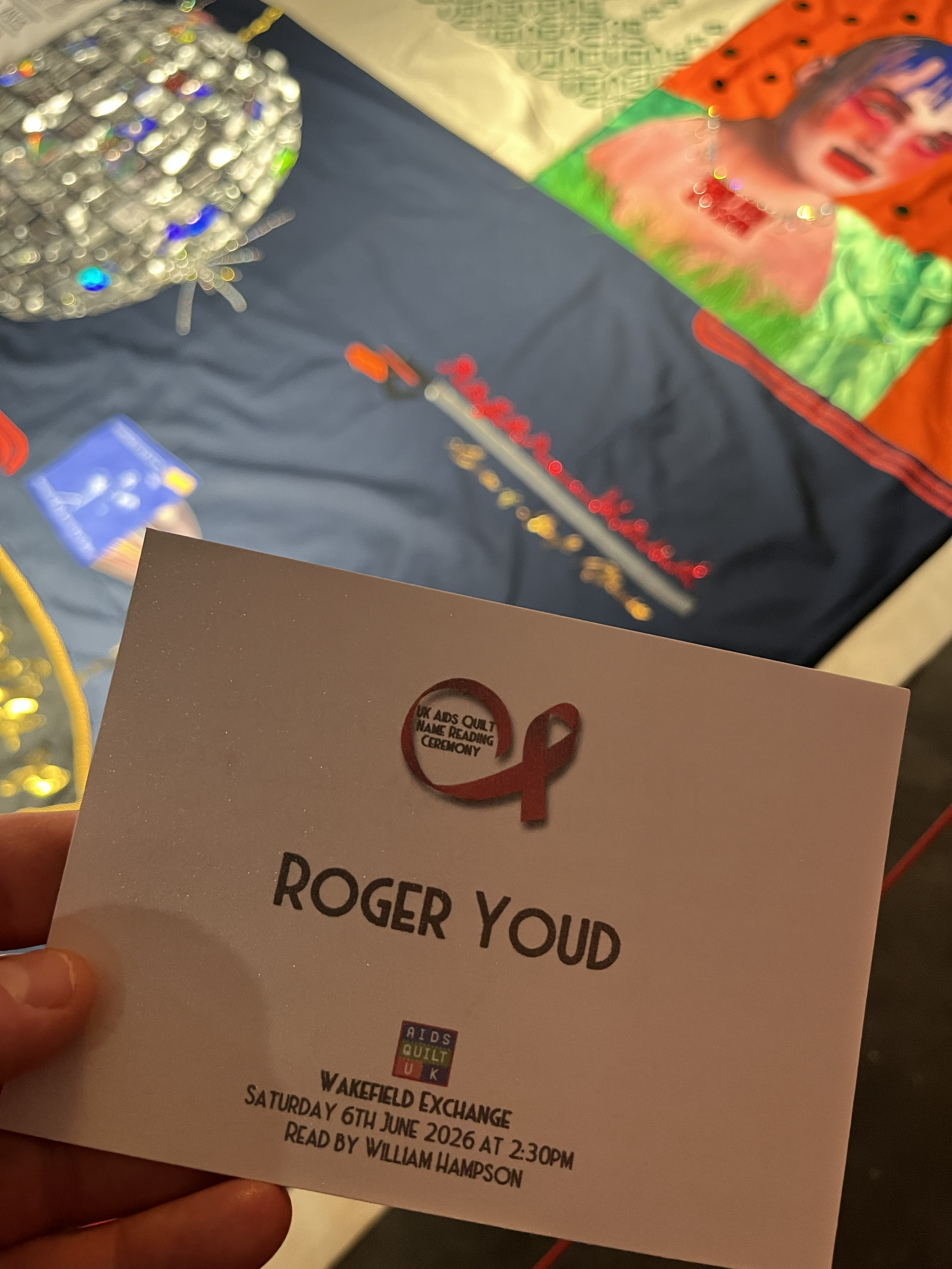


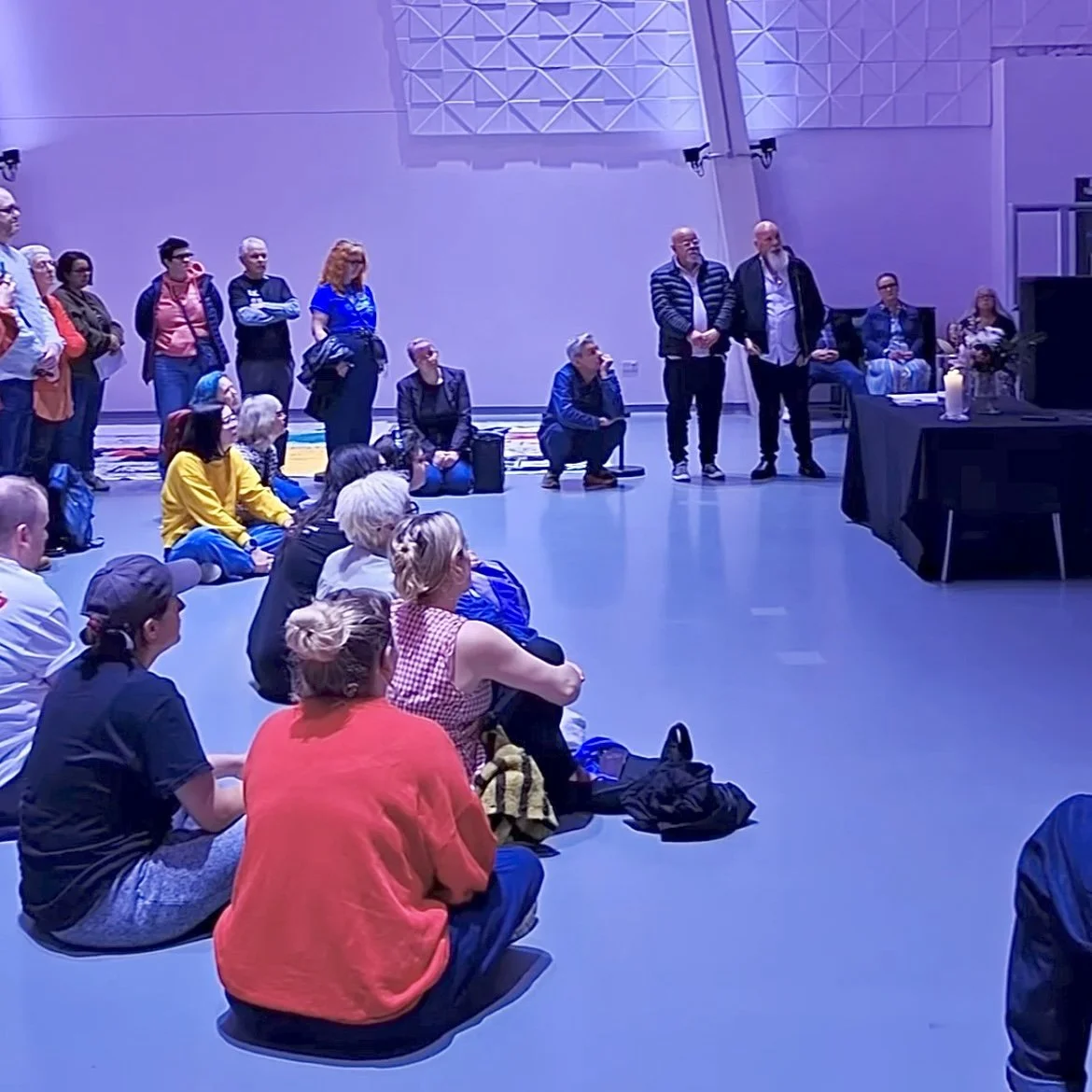
On Saturday 6 June 2026 at 2:30pm, as is tradition at AIDS Quilt displays, the Reading of the Names ceremony took place; I had the honour of reading 43 names from Quilt 47, among them Roger Youd, who is memorialised on his own panel. The Wakefield Exchange fell into a hushed reverence — people paused, many standing or seated on the floor along the entire stretch of the large exhibition hall on both sides of the quilt — as voices rose and faltered over each name.
Roger’s brother Carlton, his wife Sue, their daughter and son‑in‑law and their 10‑month‑old granddaughter were there, a quiet, tender presence that underscored the personal loss behind every panel and the communal act of remembrance that the quilt and the reading embodies.
Unbeknown to the family upon reading Roger’s name, I called upon Manchester Council to make a sincere apology to both Roger and the Youd family. The Youd family have maintained a dignified silence for over 40 years, yet I recall from my earlier conversations with Carlton, who recounted Roger’s detention and was still miffed as to why the council felt it necessary; he said, “You know Will, nobody ever apologised.”
That silence has been a quiet weight on a family that deserved truth and redress long ago, and an apology from the council—clear, unambiguous and offered without deflection—would be a small but important step towards acknowledging the harm done and honouring the dignity the family have steadfastly preserved.
UPDATE: 30 June 2026
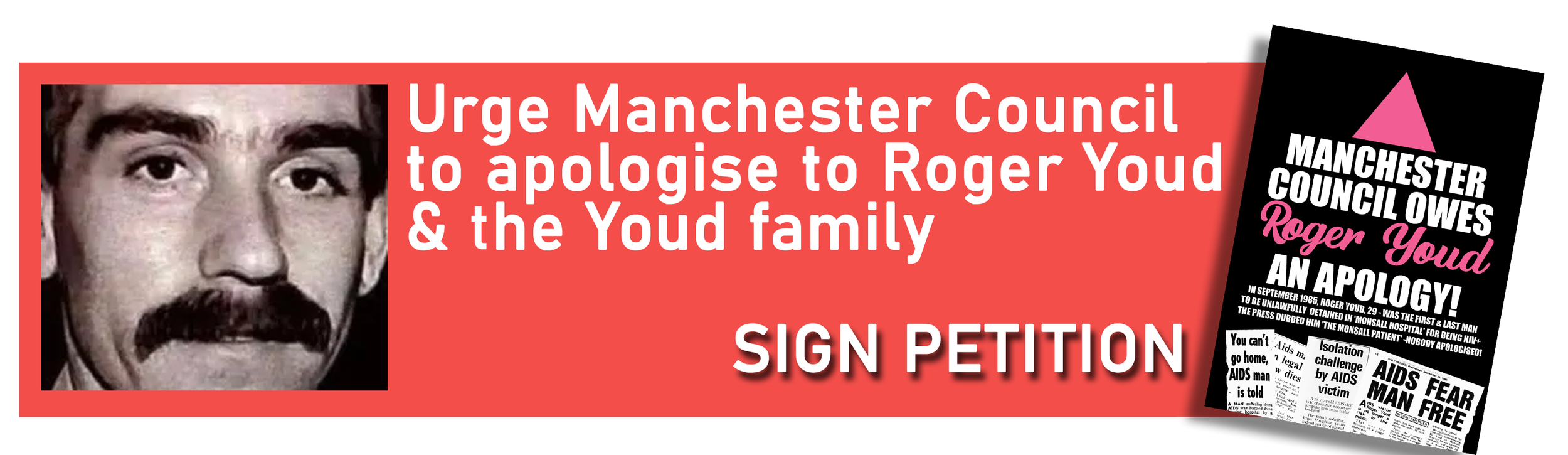
Change.org Petition
Given over six months had passed with no reply to my follow-up emails from Manchester Council, I was left with no choice but to start a petition. Roger’s HIV/AIDS diagnosis had already been played out in the public realm, attracting national and international press coverage, and the echoes of that exposure still reverberate: many in the community hearing of the hospital court order or of the “Monsall Patient” for the first time. Although Roger won his appeal and the court order was rescinded, nobody was held accountable and there was no apology, leaving a deep sense of injustice and a pressing need for public acknowledgment.
The history files aside, Roger himself never received an apology; instead he was dismissed as having ‘been silly’ for merely expressing a wish to go home while unable to get out of his hospital bed. Roger deserves, first and foremost, a clear and unambiguous public apology — not least for the indignity of being patronised in his most vulnerable moment, but being subjected to an order that kept him a ‘virtual prisoner’.
Equally deserving of an apology are his family, who shielded him from the tabloid glare and endured the lurid, speculative copy written about his detainment despite there being not a single person willing or able to offer anything controversial about Roger; he was simply an ordinary gay man in Manchester, an office clerk by day and DJ by night who lived life and his ever growing vinyl music collection.
UPDATE: 4 July 2026
Pride London
Working a bar shift on Soho’s Old Compton Street for London Gay Pride, I armed myself with 5,000 A5 double‑sided colour flyers urging revellers to sign the petition for an apology for Roger. I handed them out before the Pride parade got underway and again before my shift began, slipping them into hands and pockets as the street filled; then, on my lunch hour under a sky the exact shade of Pride blue with sunshine and a proper party atmosphere, I kept going, pressing flyers into palms, into outstretched arms and into the tide of people passing the bar.
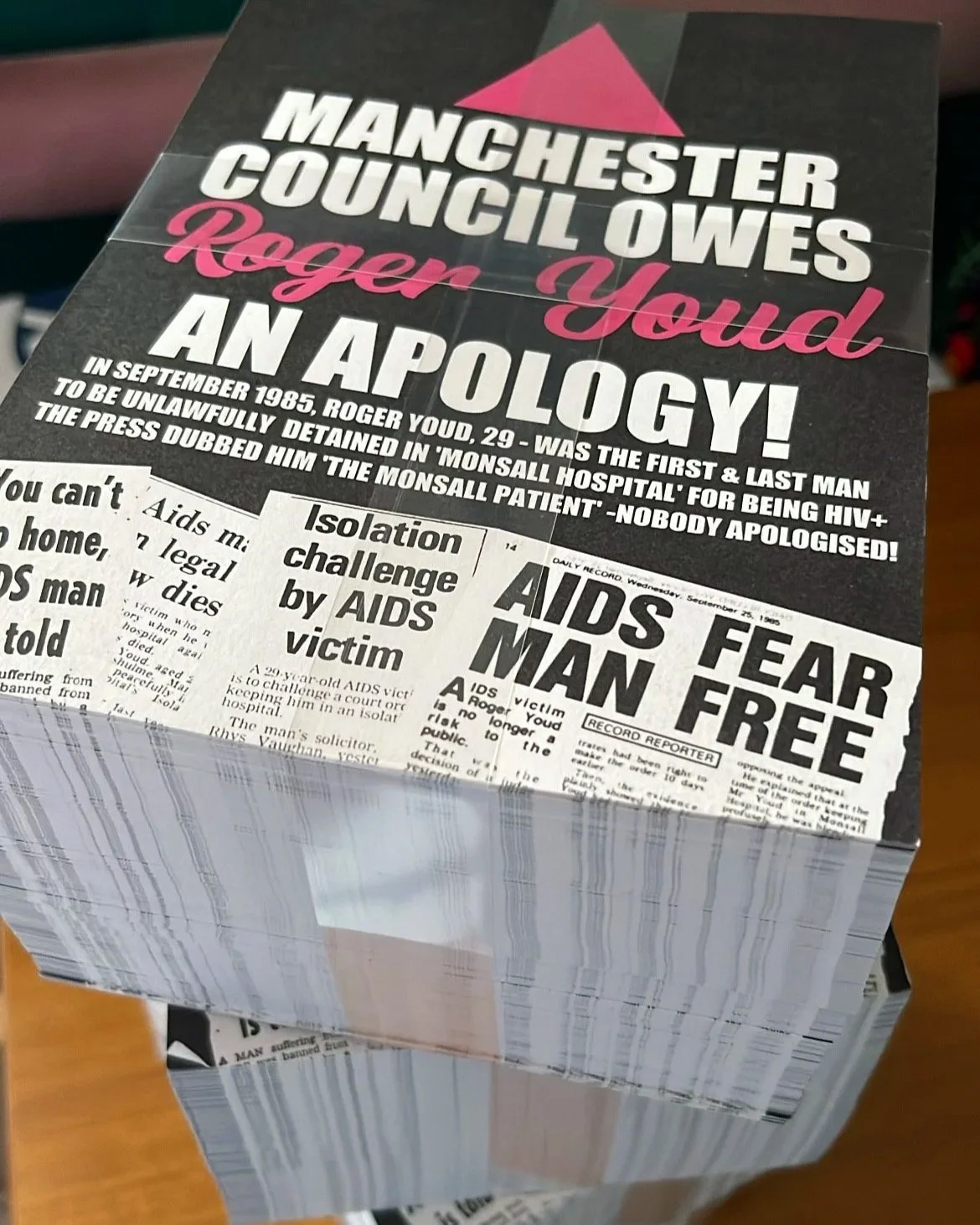
5’000 Flyers
At one point a woman chased me down Old Compton Street, breathless and smiling, saying she knew Roger’s story and wanted a handful to hand out herself and share with her friends.
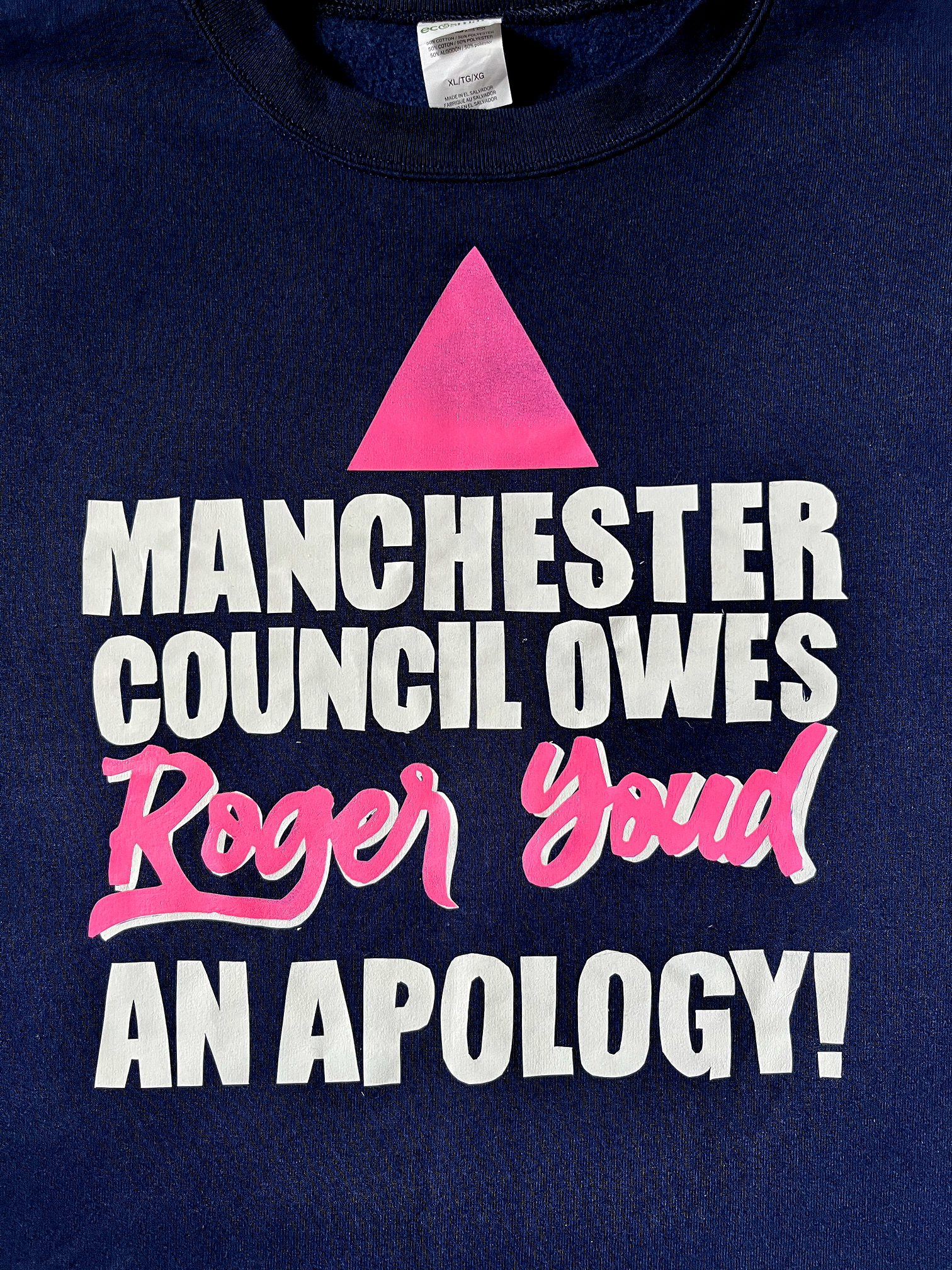
I also placed flyers and QR codes strategically around the pub and, wearing my campaign T-shirt, found that many people asked about Roger; some shared that they already knew his story, while those hearing for the first time were outraged that, forty years on, there has still been no apology to Roger or the Youd family.
UPDATE: July 2026
Over the course of several weeks I have been writing to the media and posting Roger’s story on social media, although disappointingly Canal Street Media’s Facebook account twice removed our posts. I have been speaking with the Manchester Evening News, who have gone to great lengths to produce an article calling for an apology and have approached Manchester City Council, which seemingly prompted a response to my letter to the now Mayor of Manchester, Bev Craig, sent some seven months ago. The city solicitor’s letter recognised that, at the time Roger had a detention order imposed on him, they did get some things “badly wrong,” but the letter stopped short of apologising to Roger Youd and to the Youd family, which is deeply disappointing — surely when we get things wrong we should try to put them right, often easily and swiftly, with an apology.
I have also been speaking with Manchester Pride, who have been wonderfully supportive and are exploring arrangements for something special that I’m unable to reveal until it’s all confirmed — so fingers crossed. in the meantime I wanted to acknowledge the positive momentum and thank them for their input.
UPDATE: 1 August 2026
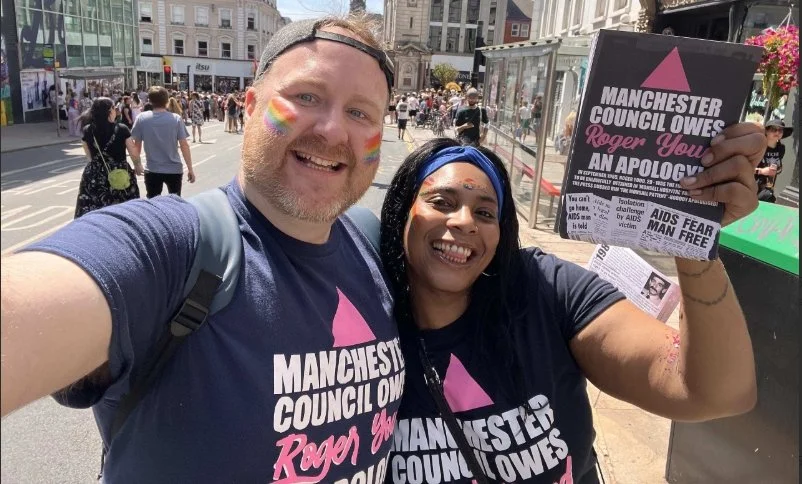
Saturday 1 August 2026, Mel and I caught the train to Brighton to share Roger’s story and rally support for our call for Manchester Council to apologise; from the moment we arrived we were handing out flyers and people not only took the time to read them but a large proportion said they already knew of the order thrust upon Roger, whether through the award‑winning drama It’s a Sin or because they had lived through the era when Roger was subjected to the unlawful detainment order. One word we heard constantly was “disgusting” — that nobody apologised to Roger and Manchester Council were seemingly dragging their heels on our call for one. That anger fueled conversations all afternoon, turning passersby into allies, each small act of attention a reminder that history is not forgotten and demand for accountability only grows louder.
Brighton Pride
UPDATE: 5 August 2026
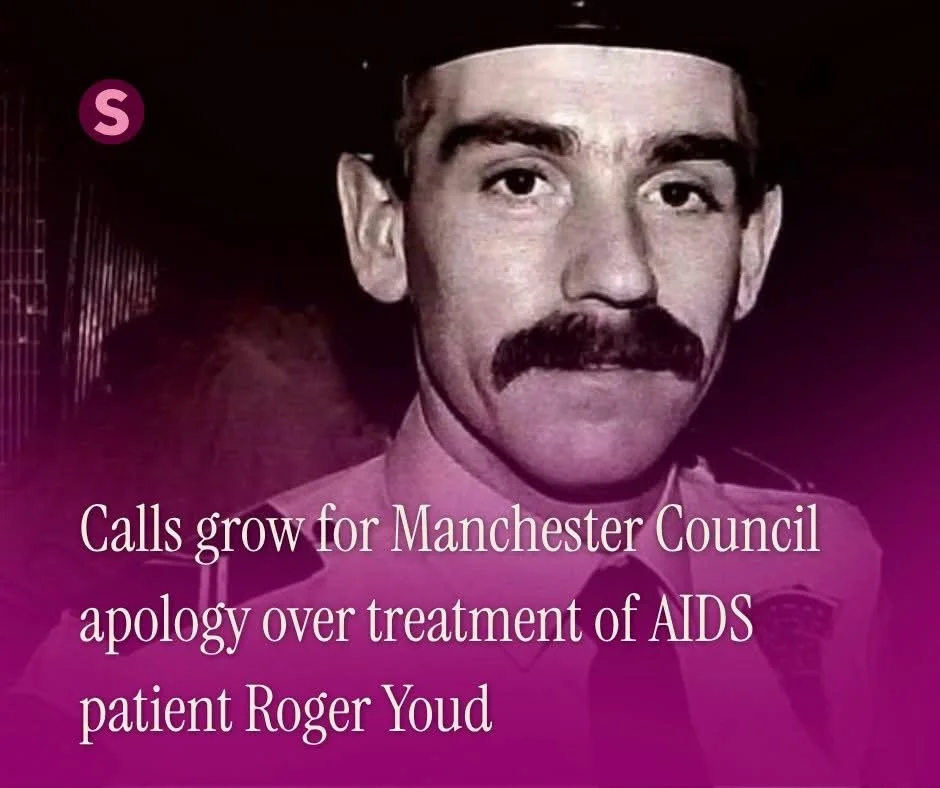
Journalist & Editor Graham Robson, of Scene Magazine founded in 1993 which has for decades been a publication rooted in history, purpose and pride,.
On 5th August 2026 they reported on our call for Manchester City Council to issue a posthumous apology to Roger Youd and to the Youd family, recognising past wrongs and affirming a commitment to truth, reckoning and reconciliation on behalf of a community that Scene Magazine has long championed.
UPDATE: 9 August 2026
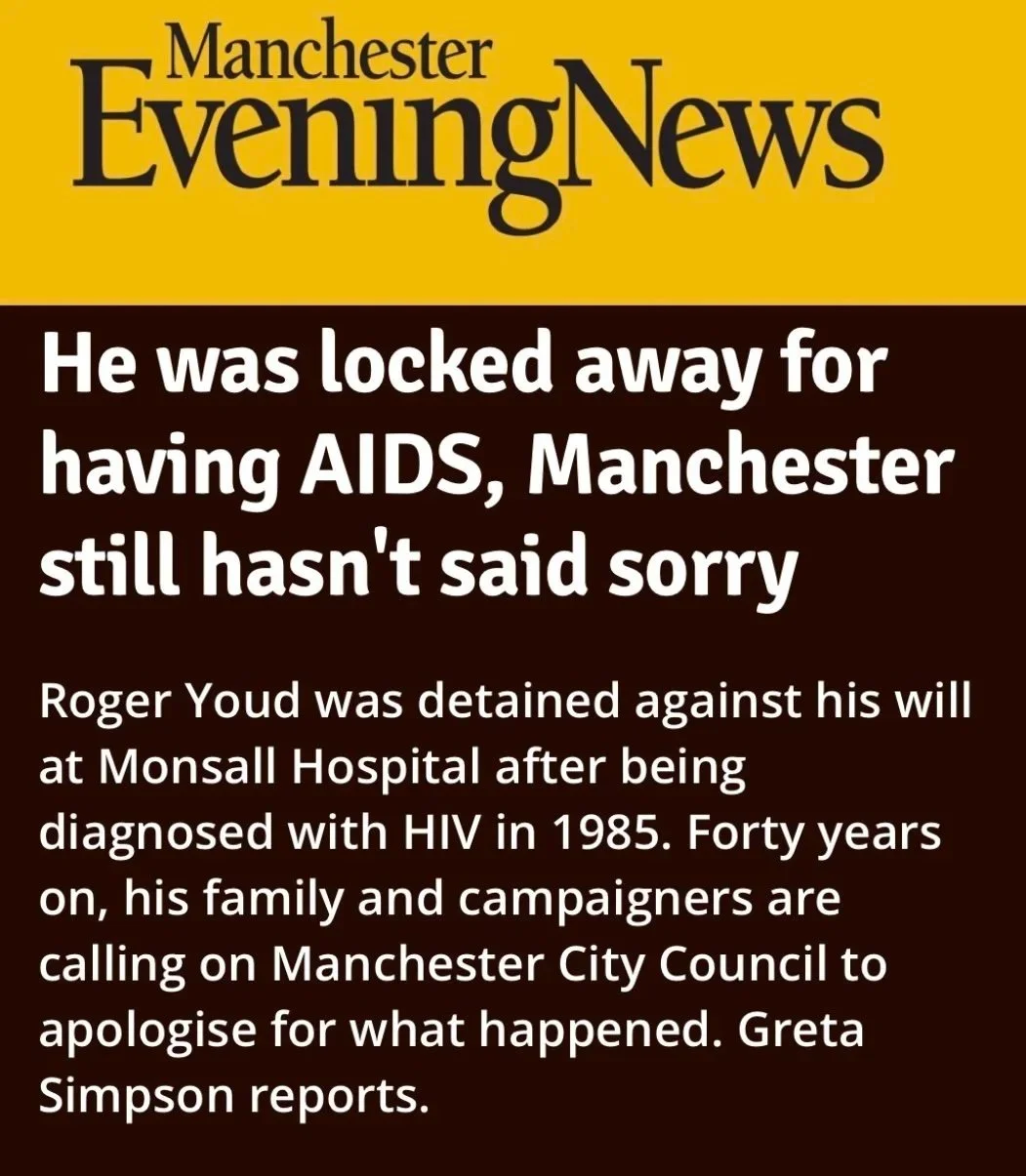
Senior reporter Greta Simpson of the Manchester Evening News has written an in‑depth piece pressing Manchester City Council to apologise to Roger Youd and the Youd family, setting out the case with statements from key figures and organisations. The article quotes the Terrence Higgins Trust emphasising the enduring harm of institutional failures during the HIV/AIDS crisis, and Paul Fairweather MBE, co‑founder of the George House Trust and friend of Roger.
The article also includes a heartfelt statement from Councillor Pat Karney along with human rights activist Peter Tatchell, all highlighting the broader need for accountability and a public reckoning of this injustice. The report also includes an official statement from Manchester City Council addressing the call for an apology.
Any third-party copyright material has been accessed through paid membership or incurred an administrative cost. Material has been used under the ‘fair use’ policy for the purpose of research, criticism and/or education, especially around the topic of HIV/AIDS. There has been no financial/commercial gain.